We often talk about wellness in terms of diet and exercise. We track our steps, monitor our sleep cycles, and count our macros. In recent years, mental wellness has also taken center stage, with therapy and mindfulness becoming standard topics of conversation. Yet, there is a third dimension of health that often gets overlooked until we feel a deep, inexplicable ache: spiritual wellness.
You might be physically fit and mentally sharp, but still feel like something is missing. Maybe you experience a persistent sense of restlessness, a lack of purpose, or a feeling of disconnection from the world around you. You might find yourself asking, “Is this all there is?” even when life looks good on paper.
This is where spiritual wellness comes in. It is not necessarily about religion, although it can be. It is about the health of your inner life—your values, your beliefs, and your connection to something larger than yourself. It is the quest for meaning and the practice of aligning your daily actions with your deepest truths.
In this guide, we will explore the concept of spiritual wellness in depth. We will strip away the mystical jargon and look at practical, tangible ways to cultivate inner balance. Whether you are a devout believer, a curious skeptic, or somewhere in between, this guide offers a roadmap to a more grounded, connected, and meaningful life.
What Is Spiritual Wellness?
Spiritual wellness is a state of harmony between your inner values and your outer actions. It is the ongoing process of seeking meaning and purpose in human existence. It involves exploring your connection to the universe, to others, and to your own inner self.
Think of it as the “why” behind everything you do. Physical wellness provides the energy to live; mental wellness provides the clarity to navigate life; spiritual wellness provides the reason for living in the first place.
A person with high spiritual wellness typically possesses:
- A sense of purpose: They know what matters to them and why.
- Inner peace: They have a stable core that isn’t easily shaken by external chaos.
- Compassion: They feel a deep connection to others and a desire to help.
- Resilience: They can find meaning even in difficult circumstances.
- Alignment: Their daily choices reflect their core beliefs.
It is important to distinguish spiritual wellness from religion. Religion provides a specific framework, community, and set of dogmas. Spiritual wellness is a broader concept. You can be deeply religious and spiritually unwell (judgmental, fearful, disconnected). Conversely, you can be an atheist and possess profound spiritual wellness (deeply ethical, connected to nature, at peace).
Why Spiritual Wellness Is Crucial for Total Health
In our productivity-obsessed culture, tending to the spirit can feel like a luxury—something to do when all the “real work” is finished. But ignoring this aspect of your health can lead to serious consequences.
The Connection to Mental Health
Research consistently shows a strong link between spiritual wellness and mental health. A lack of purpose is a significant predictor of depression and anxiety. When we don’t know who we are or why we are here, the inevitable struggles of life can feel overwhelming and pointless. Cultivating a spiritual practice provides a buffer against stress and a framework for understanding suffering.
The Impact on Physical Health
The mind-body connection is real. Chronic stress and existential angst trigger the body’s fight-or-flight response, releasing cortisol and inflammation-causing chemicals. Spiritual practices like meditation and prayer trigger the “relaxation response,” lowering blood pressure, improving immune function, and enhancing sleep.
The Crisis of Disconnection
We are living in an epidemic of loneliness. Despite being digitally connected, many Americans feel profoundly isolated. Spiritual wellness fosters a sense of belonging—to a community, to humanity, or to the natural world. It reminds us that we are not isolated islands, but part of a vast, interconnected web.

The Pillars of Spiritual Wellness
Just as physical health relies on pillars like nutrition and movement, spiritual wellness rests on specific foundations. Understanding these pillars helps you identify where you might be out of balance.
1. Meaning and Purpose
This is the North Star of spiritual wellness. It answers the question: “What is my life for?” Purpose doesn’t have to be grand, like saving the world. It can be as simple as raising kind children, creating beauty, or being a good neighbor. When you have a clear purpose, you have a reason to get out of bed in the morning, even on difficult days.
2. Connectedness
This pillar is about relationships. It involves your relationship with yourself (self-acceptance), with others (empathy and love), and with the environment (stewardship). Spiritual wellness dissolves the illusion of separation. It helps you see yourself in others and others in yourself.
3. Values and Ethics
Spiritual wellness requires integrity. It means knowing what you stand for—honesty, courage, kindness, justice—and living in a way that honors those values. When your actions contradict your values (cognitive dissonance), it creates deep spiritual distress.
4. Transcendence
This is the ability to rise above the immediate, material world. It involves moments of awe and wonder—feeling small in a good way. Whether it’s looking at the stars, listening to a symphony, or witnessing an act of great sacrifice, transcendence reminds us that life is mysterious and beautiful.
Practical Ways to Cultivate Spiritual Wellness
You don’t need to retreat to a mountaintop to find spiritual balance. You can build it right in the middle of your busy life. Here are essential practices to help you nurture your spirit.
1. The Practice of Inner Silence (Meditation)
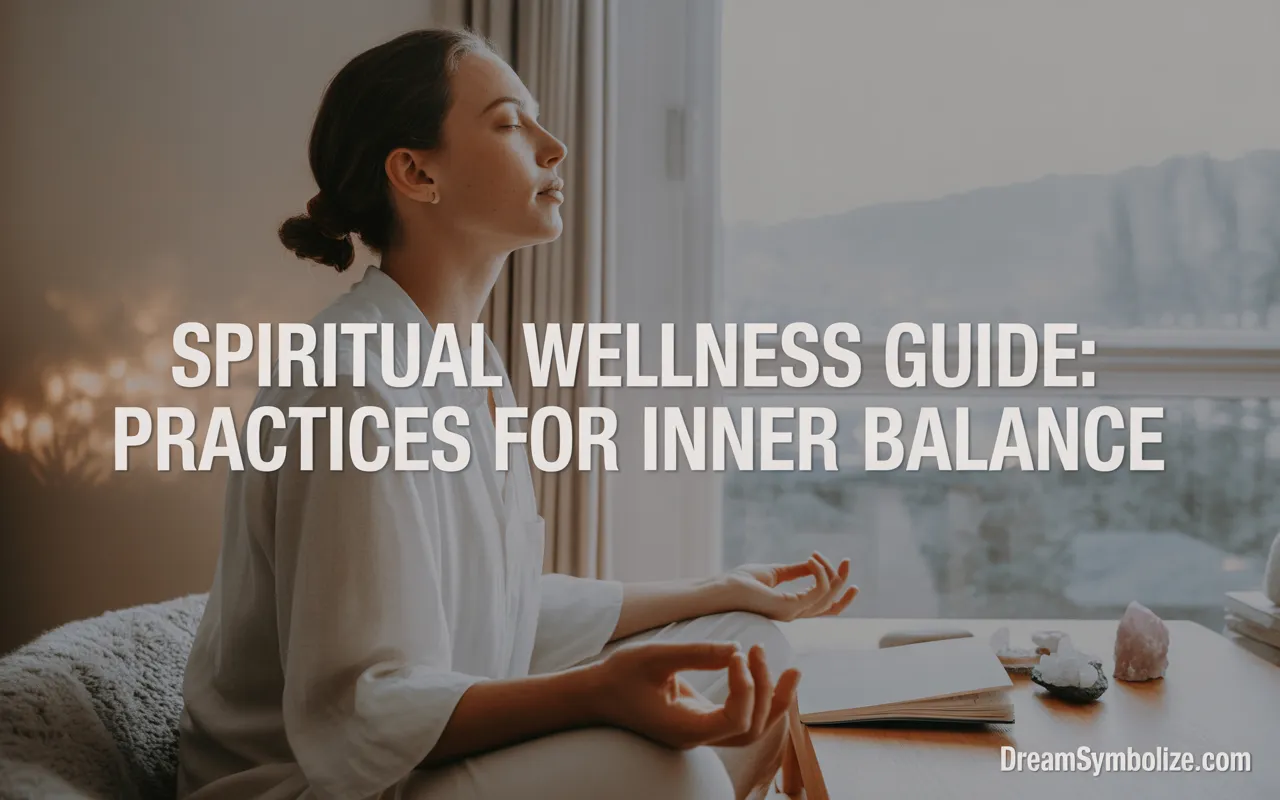
We live in a noisy world. Silence is the nutrient our souls are starving for. Meditation is simply the practice of turning down the volume of the outside world so you can hear your inner self.
How to start:
- Start small: Commit to just 5 minutes a day.
- Focus on breath: Sit comfortably, close your eyes, and pay attention to your inhaling and exhaling.
- Observe, don’t judge: When your mind wanders (and it will), simply notice it and gently return to the breath. This act of returning is the “rep” that builds your spiritual muscle.
2. Journaling for Self-Discovery
Writing is a powerful tool for excavation. It helps you untangle your thoughts and access wisdom you didn’t know you had.
Prompts for spiritual wellness:
- What are three values I claim to hold, and how did I practice (or fail to practice) them today?
- When do I feel most alive? What am I doing in those moments?
- If I wasn’t afraid of judgment, what would I change about my life right now?
3. Nature Immersion
Nature acts as a reset button for the human spirit. It operates at a pace of patience and growth, contrasting sharply with our hurried digital lives.
How to practice:
- Leave the phone behind: Go for a walk without listening to a podcast or checking texts.
- Engage the senses: Don’t just look at nature; touch the bark of a tree, smell the rain, listen to the birds.
- Find awe: Seek out natural sights that make you feel small, like a vast ocean, a mountain range, or a starry sky. This perspective shift is deeply healing.

4. Cultivating Gratitude
Gratitude is more than just saying “thank you.” It is a spiritual discipline that shifts your focus from scarcity (what you lack) to abundance (what you have). It rewires the brain to scan for the good.
How to practice:
- The specific list: Every evening, write down three things you are grateful for. Be specific. Instead of “my family,” write “the way my son laughed at dinner.”
- Express it: Send one text or email a week telling someone why you appreciate them. This builds connection and spreads high-vibrational energy.
5. Mindful Service (Volunteering)
One of the quickest ways to improve your own spiritual wellness is to focus on someone else. Service pulls you out of the ego-trap of self-obsession. It connects you to the broader human experience and activates feelings of compassion.
How to practice:
- Look for small opportunities: You don’t need to start a non-profit. Help a neighbor carry groceries. Listen deeply to a friend who is struggling.
- Align with passion: Volunteer for a cause that genuinely moves you, whether it’s animal welfare, literacy, or the environment.
6. Defining Your Personal Ethics
Spiritual distress often comes from living out of alignment with our conscience. Taking time to clearly define your ethical code gives you a solid foundation for decision-making.
How to practice:
- The Tombstone Test: What do you want to be remembered for? “She made a lot of money” or “She was incredibly generous”?
- Identify your top 5 values: Write them down. (e.g., Integrity, Freedom, Compassion, Creativity, Loyalty). Post them where you can see them. Before making a big decision, check it against this list.
Overcoming Obstacles to Inner Balance
Even with the best intentions, the path to spiritual wellness is rarely a straight line. Here are common roadblocks and how to navigate them.
The “Too Busy” Trap
In American culture, busyness is often worn as a badge of honor. We feel guilty if we aren’t “doing” something productive.
- The Shift: Reframe spiritual practice as essential maintenance, not wasted time. You wouldn’t drive a car for years without changing the oil. Meditation and solitude are the oil changes for your soul. They make you more effective, not less.
Cynicism and Skepticism
If you’ve been hurt by organized religion or turned off by “woo-woo” spirituality, you might feel resistant to these concepts.
- The Shift: Strip away the dogma. You don’t have to believe in crystals or deities to practice spiritual wellness. Focus on the psychological and humanistic benefits: peace, clarity, and kindness. Take what works and leave the rest.
Comparison
In the age of Instagram spirituality, it’s easy to feel like you’re doing it wrong because you don’t have a perfect yoga room or you still get angry in traffic.
- The Shift: Remember that spiritual wellness is an internal state, not a performance. It is messy and nonlinear. The goal isn’t to be a perfect Zen master; the goal is to be a more conscious, compassionate human being.

Assessing Your Spiritual Wellness: A Self-Check
How do you know if your spiritual health needs attention? Ask yourself these questions honestly.
- Do I feel a sense of peace, even when things go wrong? Or does every minor setback send me into a spiral?
- Can I articulate my life’s purpose in one or two sentences? Do I know why I am doing what I am doing?
- Do I feel connected to the people around me? Or do I feel isolated and misunderstood?
- Do I have a way to recharge my inner battery? Do I know what restores me, and do I make time for it?
- Am I holding onto grudges or resentment? Or am I able to forgive and let go?
If you answered “no” to many of these, it’s not a sign of failure. It’s simply a dashboard light letting you know that your spirit needs some tending.
Integrating Spiritual Wellness into Daily Life
The ultimate goal isn’t to be spiritual for 20 minutes in the morning and then stressed and unkind for the rest of the day. The goal is integration—bringing that sense of balance into your commute, your workplace, and your relationships.
- The Sacred Pause: Before you walk into a meeting or answer the phone, take one deep breath. Center yourself.
- Mindful Eating: Turn off the TV during dinner. Taste your food. Be grateful for the nourishment.
- Compassionate Commuting: Instead of cursing the traffic, use the time to listen to an uplifting podcast or simply sit in silence. Wish the other drivers well.
Conclusion: The Journey Inward
Spiritual wellness is not a destination you reach and then stop. It is a lifelong journey of coming home to yourself. It is the brave work of asking big questions and living the answers.
In a world that constantly pushes us to look outward—for approval, for success, for distraction—spiritual wellness invites us to look inward. It reminds us that the peace we are searching for isn’t in the next purchase or the next promotion. It is already here, waiting for us to make space for it.
Start small. Pick one practice from this guide—maybe a daily gratitude list or a weekly walk in the woods. Commit to it not as a chore, but as a gift to yourself. As you nurture your inner world, you will find that your outer world begins to change. You will become more resilient, more joyful, and more deeply connected to the beautiful, messy, miraculous experience of being alive.
Frequently Asked Questions
Is spiritual wellness the same as being religious?
No. Religion typically involves a specific system of beliefs, worship, and community. Spiritual wellness is a broader concept concerning your personal quest for meaning, purpose, and connection. You can be spiritual without being religious, and vice versa.
How much time does it take to practice spiritual wellness?
It doesn’t require hours of your day. It is more about the quality of your attention than the quantity of time. Five minutes of intentional silence or gratitude can be transformative if practiced consistently.
Can spiritual wellness help with anxiety?
Yes. Practices like meditation and mindfulness are proven to reduce anxiety by calming the nervous system and keeping you grounded in the present moment, rather than worrying about the future.
What if I don’t know what my purpose is?
That is okay. The search for purpose is part of the practice. Start by following your curiosity and noticing what brings you joy. Purpose often reveals itself in the doing, not just the thinking.