We are experts at taking care of our physical bodies. We know to drink water, eat vegetables, and move our bodies to stay healthy. We are getting better at mental self-care, understanding the importance of therapy, boundaries, and mental rest. But there is a third pillar of well-being that often gets neglected until we hit a crisis point: spiritual self-care.
You might feel physically healthy and mentally sharp, yet still experience a lingering sense of emptiness. Perhaps you feel disconnected from your purpose, or you find yourself constantly reacting to life’s stressors with a short fuse. You might be “successful” by society’s standards but feel spiritually malnourished.
Spiritual self-care is the practice of tending to your soul. It isn’t about religion, though it can include it. It is about connecting with your inner self, your values, and something larger than your individual ego. It is the art of nurturing the non-physical essence of who you are.
This comprehensive guide explores the vital world of spiritual self-care. We will break down what it really means, why it is the missing link in holistic health, and provide a robust toolkit of practices you can use to nourish your spirit in a chaotic world.
What Is Spiritual Self-Care?
Spiritual self-care is any ritual or practice that connects you to your true self and the realness of the present moment. It is the conscious effort to nurture your spirit, just as you would nurture a child or a garden.
At its core, it is about peeling back the layers of “who you should be” to reveal who you actually are. In our modern American culture, we are often defined by our productivity, our job titles, and our social status. These are attributes of the ego. Spiritual self-care is the antidote to ego-centric living.
It involves activities that:
- Create Inner Stillness: Quieting the mental chatter to hear your intuition.
- Foster Connection: Building a relationship with the universe, nature, or the divine.
- Clarify Meaning: Aligning your daily actions with your deepest values.
- Cultivate Awe: Reminding yourself of the vast mystery of existence.
Unlike physical self-care, which often focuses on maintenance (like brushing your teeth), spiritual self-care focuses on expansion. It expands your perspective, your capacity for love, and your resilience in the face of hardship.
Why Spiritual Self-Care Is Essential, Not Optional
It is easy to dismiss spiritual practices as a luxury—something you’ll get to when you have “extra time.” But the reality is that spiritual wellness is foundational to overall health. When your spirit is depleted, everything else suffers.
1. It Builds Deep Resilience
Life is unpredictable. Loss, failure, and change are inevitable. Without a spiritual foundation, these events can shatter us. Spiritual self-care builds an internal anchor. When you know who you are beyond your external circumstances, you can weather the storms of life without being swept away. You develop a trust that you can handle whatever comes your way.
2. It Combats Burnout and Existential Fatigue
Burnout isn’t just about working too hard; it’s often about a disconnection from meaning. When we grind away at tasks that don’t align with our soul’s purpose, we become exhausted on a deep level. Spiritual self-care reconnects us to our “why,” infusing our daily tasks with renewed purpose and energy.
3. It Enhances Connection with Others
When we are disconnected from ourselves, we cannot truly connect with others. We project our insecurities and needs onto them. By tending to our own spiritual needs, we become more whole. We stop looking to others to complete us, which allows us to love them more freely and authentically.

Core Practices for Spiritual Self-Care
Spiritual self-care is highly personal. What feeds one person’s soul might feel like a chore to another. The key is to experiment and find the practices that make you feel expansive, grounded, and alive. Here is a curated list of essential practices to explore.
1. The Practice of Silence (Digital Detox)
We live in an era of constant noise. Podcasts, notifications, news, and music fill every gap in our day. Silence has become a rare commodity, yet it is essential for spiritual health.
How to practice:
- The Morning Quiet: Spend the first 15 minutes of your day in total silence. No phone, no talking, no music. Just drink your coffee and look out the window.
- Silent Commute: Turn off the radio during your drive to work. Use the time to check in with yourself.
- Tech Sabbaths: Designate one day a week (or even half a day) where you unplug completely. This creates space for your own thoughts to emerge.
2. Intuitive Journaling
Writing is a powerful tool for excavating the soul. It moves thoughts from the swirling chaos of the mind onto paper, where they can be seen and understood.
How to practice:
- Morning Pages: Popularized by Julia Cameron, this involves writing three pages of stream-of-consciousness thought first thing in the morning. It clears the “mental clutter” so you can access deeper creativity.
- Dialogue with the Self: Ask your higher self a question, such as “What do I need to know right now?” Then, write the answer without overthinking. You might be surprised at the wisdom that comes through.
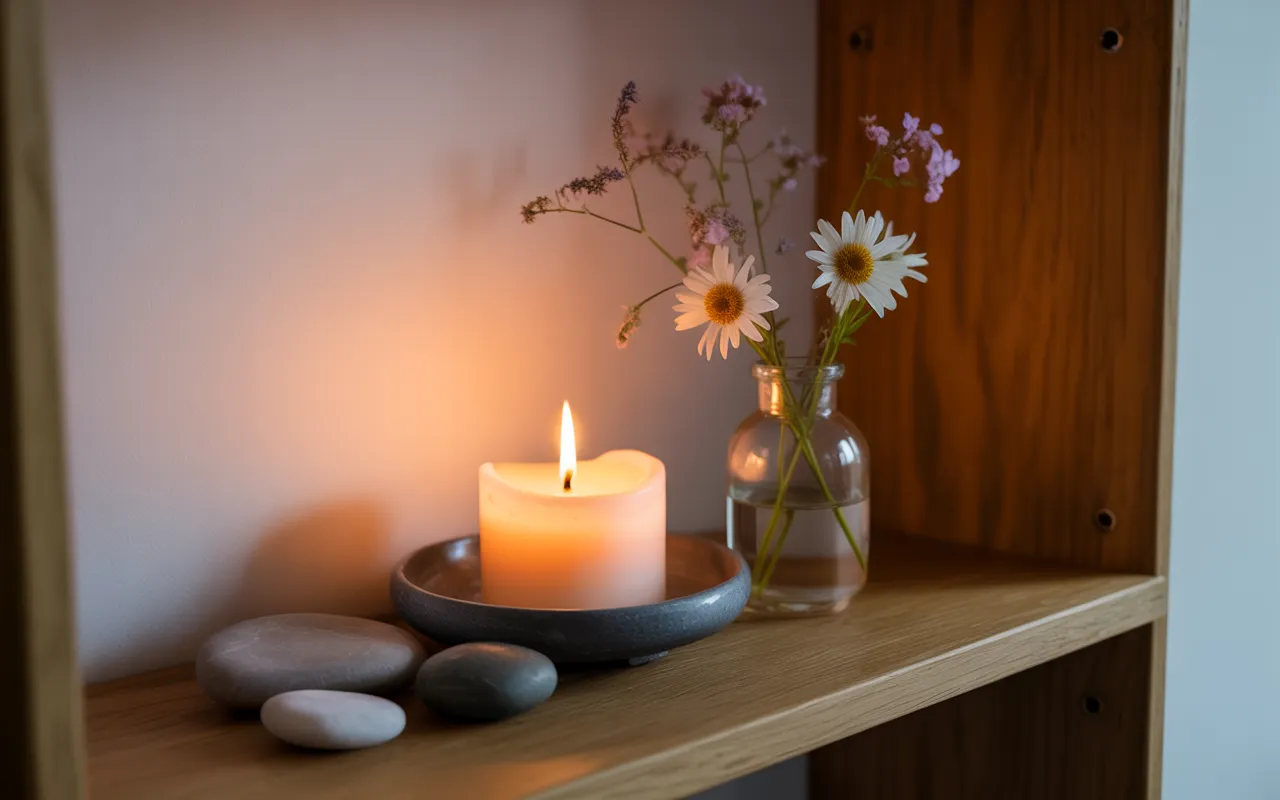
3. Creating a Sacred Space (Altar Building)
Your environment impacts your inner state. Creating a physical space in your home dedicated to your spiritual practice serves as a visual reminder to pause and connect.
How to practice:
- Find a small corner, shelf, or table top.
- Arrange items that have spiritual significance to you. This might include a candle, crystals, photos of ancestors, a feather found on a walk, or a book of poetry.
- Treat this space with reverence. Keep it clean and uncluttered. Sit by it when you need to ground yourself.
4. Mindful Immersion in Nature
Nature is the ultimate healer. It vibrates at a frequency of balance and harmony. Spending time in the natural world reminds us that we are part of a larger ecosystem, putting our human dramas into perspective.
How to practice:
- Forest Bathing: Walk slowly through a wooded area. Engage all your senses. Smell the pine, touch the bark, listen to the wind. Do not rush to a destination; simply be with the trees.
- Sky Gazing: Spend ten minutes lying on the grass looking at the clouds or the stars. Contemplate the vastness of the universe. This induces a state of awe, which is a powerful spiritual emotion.
- Element Connection: Sit by a body of water, stand in the wind, or sit by a fire. Connect consciously with the elements.
5. Conscious Movement
We often treat our bodies as machines to be pushed, but they are vessels of the divine. Spiritual movement is about moving to feel, not to burn calories or achieve a certain look.
How to practice:
- Yoga: The word “yoga” literally means “union.” It is a system designed to unite body, mind, and spirit. Focus on the breath and the sensation of the stretch rather than the perfect form.
- Ecstatic Dance: Put on music that moves you and dance in your living room. Move however your body wants to move. Shake off stagnant energy.
- Walking Meditation: Walk slowly, coordinating your breath with your steps. Feel the contact of your feet with the earth.
6. The Ritual of Cleansing
Energetic hygiene is just as important as physical hygiene. throughout the day, we pick up stress, negativity, and the emotions of others. Cleansing rituals help us release what isn’t ours.
How to practice:
- Salt Baths: Water is a conduit for energy. Soaking in a bath with Epsom salts or Himalayan sea salt is a classic way to cleanse the aura and relax the body. Visualize the stress draining out of you into the water.
- Smoke Cleansing: Use sage, palo santo, or cedar to “smudge” yourself or your home. As the smoke rises, set the intention that it is carrying away heavy energy.
- Visual Shower: In your daily shower, visualize the water as white light washing away negativity and fatigue, leaving you sparkling and renewed.
7. Practicing Forgiveness
Holding onto resentment is like drinking poison and expecting the other person to suffer. It blocks our heart chakra and drains our spiritual energy. Forgiveness is a supreme act of self-care.
How to practice:
- Ho’oponopono: This ancient Hawaiian practice involves repeating four phrases: “I’m sorry. Please forgive me. Thank you. I love you.” You can direct this toward yourself, a specific person, or a situation.
- The Release Letter: Write a letter to someone who hurt you. Pour out all your anger and pain. Then, destroy the letter (burn it safely or shred it). Say out loud, “I release this burden.”
8. Engaging with Art and Beauty
Beauty feeds the soul. When we encounter something truly beautiful—a piece of music, a painting, a sunset—it bypasses the analytical mind and speaks directly to the heart.
How to practice:
- Visit a museum and spend 20 minutes looking at just one painting.
- Listen to a piece of classical or instrumental music with your eyes closed, doing nothing else.
- Create something just for the joy of it. Paint, draw, or arrange flowers without worrying about the result.

Overcoming Barriers to Spiritual Self-Care
Even when we know these practices are good for us, resistance shows up. We self-sabotage. Here are common barriers and how to navigate them.
“I Don’t Have Time”
This is the most common excuse. But spiritual self-care doesn’t require hours.
- The Shift: Focus on integration, not addition. You don’t need to add a 30-minute meditation to your day. You can turn your morning shower into a cleansing ritual. You can practice gratitude while brushing your teeth. It’s about the quality of attention, not the quantity of time.
“I Feel Guilty Taking Time for Myself”
Many of us, especially parents and caregivers, have internalized the belief that self-care is selfish.
- The Shift: Reframe self-care as stewardship. You cannot serve from an empty vessel. By filling your own cup, you have more patience, love, and energy to give to those you love. Your spiritual health is a gift to your family.
“I Don’t Know if I’m Doing It Right”
Spiritual imposter syndrome is real. We worry we aren’t “zen” enough or that our minds are too busy.
- The Shift: There is no “right” way. Spirituality is an experiment, not a test. If a practice brings you peace or insight, it is working. If your mind wanders during meditation, that’s normal. The practice is simply to begin again.
Integrating Spiritual Self-Care into Daily Life
The goal isn’t to be a monk for an hour and a stressed-out mess for the rest of the day. The goal is to weave spirituality into the fabric of your ordinary life.
The Morning Check-In
Before you get out of bed, place a hand on your heart. Ask yourself, “How is my spirit today?” Listen for the answer. Set an intention based on that need. If you feel fragile, your intention might be “gentleness.” If you feel energetic, it might be “service.”
The Mid-Day Reset
Set an alarm on your phone for 2:00 PM. When it goes off, stop what you are doing for one minute. Take three deep breaths. Reconnect with your intention. This breaks the autopilot of the workday.
The Evening Release
Before you go to sleep, practice a mental “un-packing.” Replay the day in your mind. Acknowledge what went well with gratitude. Acknowledge what was difficult with compassion. Visualize handing the day over to the universe/God. This allows you to sleep without the weight of the day on your chest.
Conclusion: The Journey Home to Yourself
Spiritual self-care is not a destination. It is not a badge you earn or a level you unlock. It is a lifelong relationship with yourself.
Some days, your practice will feel profound and magical. Other days, it will feel like you’re just going through the motions. That is okay. The power lies in the commitment to show up.
By prioritizing your spiritual self-care, you are making a radical declaration that you matter. You are saying that your inner peace is more important than your to-do list. You are reclaiming your humanity in a world that wants to turn you into a machine.
Start small. Pick one practice from this guide that sparked a little curiosity in you. Try it for a week. Be gentle with yourself. As you tend to your spirit, you will find that life begins to take on a richer, more vibrant hue. You will find that the home you have been searching for has been inside you all along.
Frequently Asked Questions
Is spiritual self-care the same as religion?
No. Religion is a specific set of organized beliefs and practices, often involving a community and a deity. Spiritual self-care is a personal practice of connecting with your inner self and the broader universe. You can be religious and practice spiritual self-care, or you can be atheist and practice it.
How do I know if my spiritual self-care is working?
You will likely notice a shift in your reactivity. You might find yourself pausing before snapping at your partner. You might feel a greater sense of calm during stressful moments. You might simply feel more “like yourself.” Look for subtle shifts in your internal weather rather than dramatic external changes.
Can I practice spiritual self-care if I’m busy?
Absolutely. In fact, busy people need it the most. Micro-practices—like taking one conscious breath before answering the phone, or saying a silent thank you before eating—take mere seconds but cumulatively change your day.