Humans have always used symbols to express ideas that are too big for words. From ancient cave paintings to the logos on our smartphones, symbols communicate complex concepts in an instant.
This is especially true when we explore the spiritual meaning behind the images, patterns, and objects that have captivated humanity for millennia.
You’ve likely encountered these symbols throughout your life. Think of the peace sign, the infinity loop, or a simple cross.
We recognize them instantly, but do we understand the deeper layers of meaning they hold? These are more than just pictures; they are keys to understanding different cultures, belief systems, and even our own inner worlds.
Sacred symbolism is a language of the soul. It speaks to a part of us that intuits and feels, rather than just thinks and analyzes.
It connects us to ancient wisdom, shared human experiences, and the profound mysteries of life.
This guide will help you understand that language. We will explore what gives a symbol its spiritual weight, examine some of the most universal symbols and their meanings, and learn how to interpret them in a way that is personal and meaningful to you. This is a journey into the heart of what connects us all.
What Gives a Symbol Its Spiritual Meaning?
A symbol is anything that stands for something else. A red light means “stop,” and a heart shape represents love. But a sacred symbol does more than that. It points toward a transcendent reality, a deeper truth, or a fundamental aspect of the human condition. Its spiritual meaning is built over time through culture, mythology, and personal experience.
Several factors contribute to a symbol’s power. It isn’t just an arbitrary image; its significance is woven from the threads of history, psychology, and shared belief.
Universal Archetypes and the Collective Unconscious
Psychologist Carl Jung proposed the idea of a “collective unconscious,” a shared reservoir of experiences and images inherited from our ancestors. Within this realm exist “archetypes”—universal patterns or models of people, behaviors, or personalities that play a role in influencing human behavior.
Many sacred symbols are visual representations of these archetypes. The Wise Old Man, the Great Mother, the Hero’s Journey—these are stories and figures that appear in myths and religions all over the world.
Symbols like the Tree of Life or the Serpent tap into these deep, instinctual parts of our psyche, which is why they feel so potent and familiar, even if we’ve never studied them.
Cultural and Religious Context
The meaning of a symbol is profoundly shaped by its cultural and religious context. A symbol can hold different—sometimes even contradictory—meanings depending on who is viewing it.
Consider the swastika. For thousands of years in Eastern religions like Hinduism, Buddhism, and Jainism, it has been a sacred symbol of good fortune, well-being, and prosperity.
Yet, in the Western world, its co-option by the Nazi party in the 20th century has inextricably linked it to hatred, antisemitism, and tragedy.
This is a powerful example of how culture and history define and redefine a symbol’s spiritual meaning.
Natural and Geometric Forms
Many of the most ancient and powerful symbols are derived from nature and geometry. Early humans looked to the world around them to make sense of their existence. The sun, the moon, the stars, mountains, and rivers all became imbued with spiritual meaning.
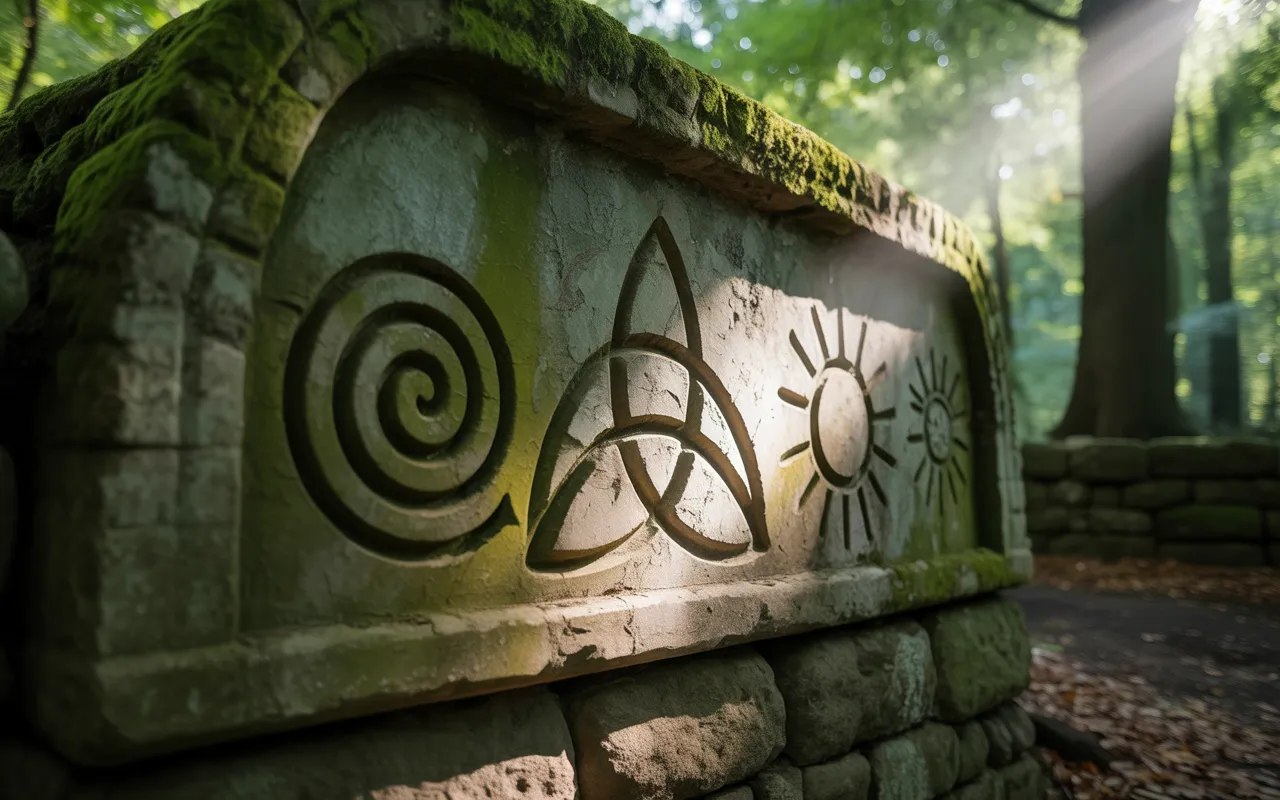
Geometric shapes also hold deep significance. Circles, with no beginning or end, often symbolize eternity, unity, and wholeness.
Triangles can represent balance, trinity, or the connection between the earthly and the divine.
These fundamental shapes form the building blocks of more complex sacred symbols across countless traditions.
Universal Symbols and Their Spiritual Meanings
While context is crucial, some symbols appear with remarkable consistency across different cultures and eras.
Their forms may vary slightly, but their core spiritual meaning often touches upon similar universal themes. Let’s explore some of the most prominent ones.
The Circle: Wholeness and Eternity
The circle is perhaps the most universal sacred symbol. With no beginning and no end, it represents infinity, eternity, unity, and completeness. It is the sun, the moon, the wheel of life, and the cyclical nature of time.
- In Zen Buddhism, the ensō (a hand-drawn circle) symbolizes enlightenment, the universe, and the void. It is a moment when the mind is free to let the body create.
- In Celtic traditions, circular knots represent the eternal nature of life and the interconnectedness of all things.
- Psychologically, the circle often represents the Self—the unified whole of the conscious and unconscious mind. Mandalas, which are complex circular designs, are used in many spiritual traditions as tools for meditation and centering.
The Tree of Life: Connection and Growth
The Tree of Life is another potent symbol found in nearly every culture. Its roots dig deep into the earth, and its branches reach toward the heavens, making it the ultimate connector between the terrestrial and the divine.
It symbolizes:
- Connection: It links the underworld (roots), the earth (trunk), and the heavens (branches).
- Ancestry and Family: Its branching form is often used to represent family lineages and our connection to our ancestors.
- Growth and Rebirth: The tree loses its leaves in winter and regrows them in spring, symbolizing resurrection, transformation, and the cycle of life, death, and rebirth.
From the Norse Yggdrasil to the biblical Tree of Knowledge, this symbol reminds us that we are rooted in the earth but aspire toward the spiritual.
The Spiral: Evolution and Journey
The spiral is an ancient symbol of the spiritual journey. It appears in nature in seashells, galaxies, and the unfurling of a fern. Unlike a circle that returns to the same point, a spiral suggests a journey that always moves outward or inward, but with continual growth and evolution.
The spiritual meaning of a spiral can represent:
- The journey from outer consciousness (materialism, ego) to the inner soul (enlightenment, essence).
- The cycles of life, the seasons, and the cosmos.
- The evolutionary process of the universe and consciousness itself.
A spiral can be seen as a pathway of discovery, where each loop brings a new level of awareness and a different perspective on the center.
The Eye: Awareness and Protection
The symbol of the eye carries deep spiritual weight across many cultures, often representing divine omniscience, clarity, and spiritual insight. It is the “window to the soul” and a symbol of the consciousness that sees and understands.
- The Eye of Horus from ancient Egypt is a famous symbol of protection, healing, and restoration.
- The Third Eye in Eastern traditions (like the Hindu Bindi or Ajna chakra) represents a gateway to higher consciousness and perception beyond ordinary sight.
- The Eye of Providence (the eye within a triangle, seen on the U.S. dollar bill) symbolizes the all-seeing eye of God watching over humanity.
This symbol challenges us to see beyond the surface and to cultivate our own inner vision.
Interpreting Symbols on Your Personal Path
Understanding the traditional meanings of symbols is a fascinating and enlightening study. However, the true power of symbolism is unlocked when you learn to interpret it in the context of your own life.
A symbol that appears in a dream, a meditation, or a moment of synchronicity may have a message specifically for you.
Developing Your Symbolic Literacy
Think of this as learning a new language. The more you expose yourself to it, the more fluent you become.
- Pay Attention: Notice the symbols that show up in your daily life. Do you keep seeing a particular animal, number, or shape? Don’t dismiss it as a coincidence. Get curious about what it might mean.
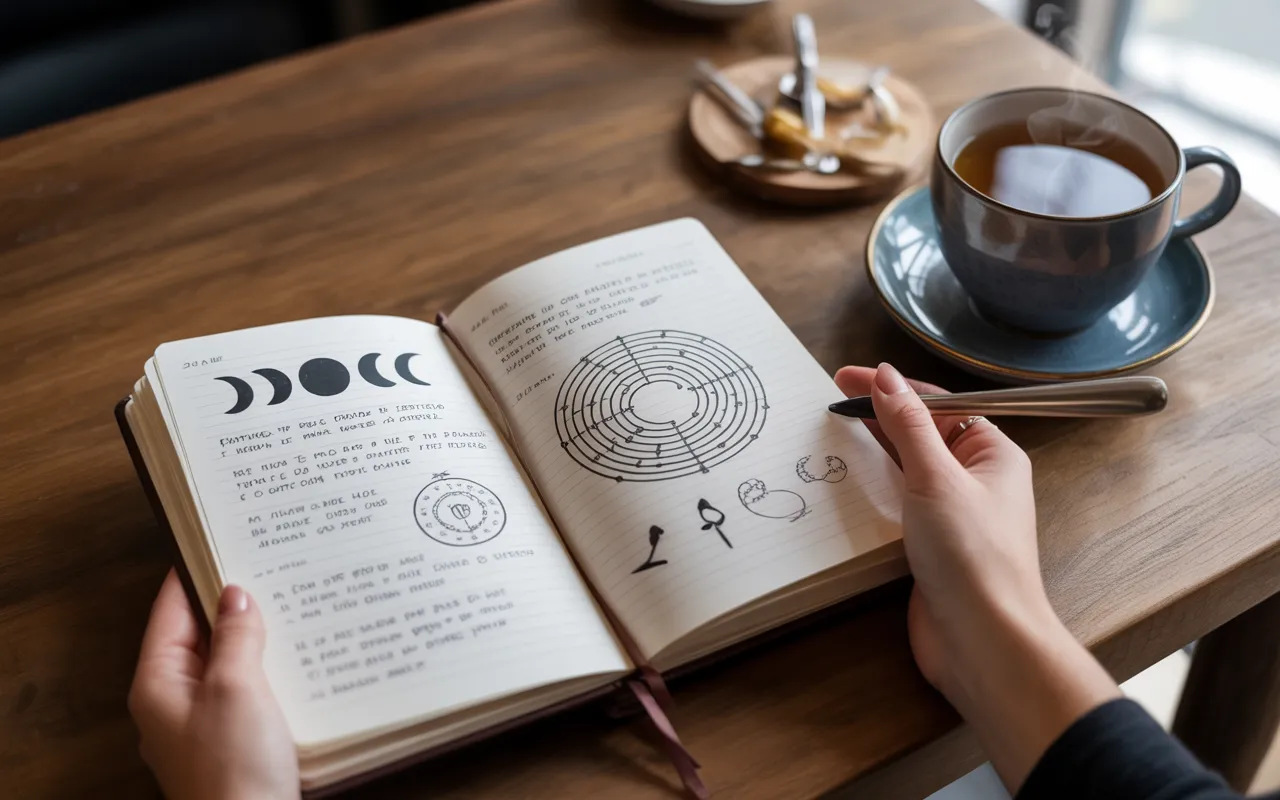
- Journaling: When a symbol captures your attention, write it down. Describe it in detail. More importantly, write down how it made you feel. Did it bring a sense of peace, fear, or excitement? Your emotional response is a huge clue to its personal meaning.
- Use Both Intuition and Research: When interpreting a symbol, start with your gut feeling. What is your immediate, intuitive association with it? After exploring your personal connection, you can then research its traditional meanings. This combination of personal intuition and collective wisdom provides a much richer understanding.
Working with Symbols in Practice
You can actively incorporate symbolism into your spiritual practice to deepen your connection and understanding.
- Meditation: You can meditate on a specific symbol. Hold the image of a circle, a tree, or a spiral in your mind’s eye. Notice what thoughts, feelings, or insights arise.
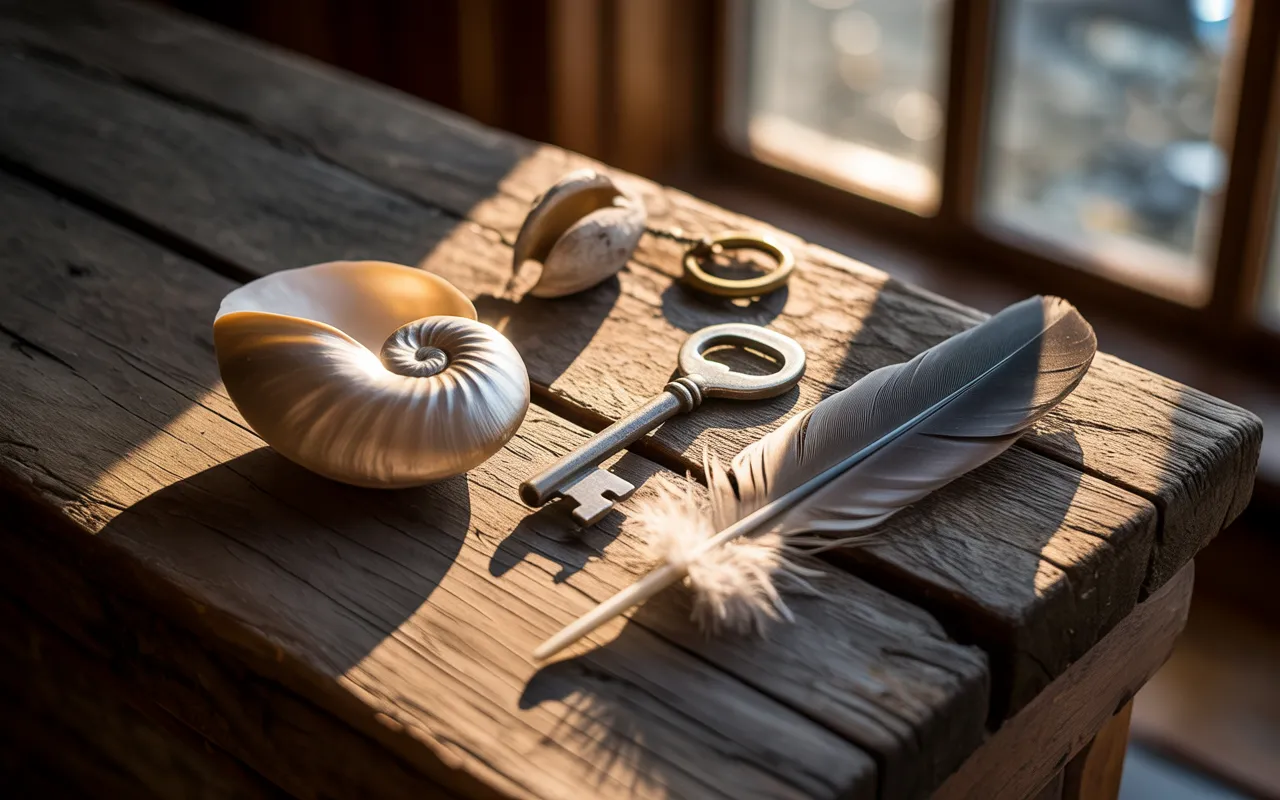
- Creating a Personal Altar: An altar is simply a small, sacred space in your home. You can place objects and symbols on it that hold personal spiritual meaning for you—a feather you found on a walk, a stone from a special place, or an image that inspires you.
- Dream Work: Dreams are rich with symbolic language. Keep a dream journal by your bed and write down your dreams as soon as you wake up. Look for recurring symbols or themes. A dream dictionary can be a starting point, but always prioritize what the symbol means to you.
For example, a dream about a snake could be terrifying if you have a fear of them. But symbolically, the snake is often a powerful archetype of transformation, healing, and rebirth (due to the shedding of its skin).
Exploring both your personal fear and the symbol’s archetypal meaning can lead to a profound insight about a change you are resisting in your life.
The Broader Spectrum of Spiritual Symbolism
Beyond the universal symbols, there are countless others that hold significance within specific systems of belief or areas of life. Exploring these can further enrich your understanding of the symbolic world.
Animal Symbolism
Animals have been our companions, our food, and our predators since the dawn of humanity. It’s no wonder they are some of the most powerful spiritual symbols. Each animal is seen to embody certain qualities.
- The Eagle: Represents spiritual vision, freedom, and a connection to the divine. It soars higher than other birds, so it is seen as a messenger between humans and the creator.
- The Wolf: Symbolizes loyalty, family, and wildness. It represents a deep connection to instinct and the importance of community.
- The Butterfly: A universal symbol of transformation. Its metamorphosis from a caterpillar into a beautiful, winged creature is a potent metaphor for spiritual rebirth and the soul’s journey.
Numerology and Sacred Geometry
Numbers and shapes are not just for mathematics; they form the very architecture of the universe. Sacred geometry ascribes spiritual meaning to geometric patterns and proportions.
- The Flower of Life: A complex geometric figure of overlapping circles, it is said to contain the patterns of creation and represents the interconnectedness of all life.
- The Number Three: Represents trinity, balance, and creation (e.g., mind-body-spirit; birth-life-death; past-present-future).
- The Number Seven: A highly spiritual number in many traditions, representing the seven chakras, seven days of creation, and a completed cycle.
Color Symbolism
Colors evoke strong emotional and psychological responses, giving them deep spiritual meaning. This can vary by culture, but some associations are quite common.
- White: Purity, innocence, and spiritual clarity.
- Blue: Peace, calmness, truth, and communication (the color of the sky and ocean).
- Green: Growth, healing, nature, and abundance.
- Red: Passion, energy, life force, and courage.
Living a More Symbolic Life
To engage with spiritual meaning is to see the world with new eyes. It is to recognize that the universe is constantly communicating with us in a language older than words. The mundane becomes magical, and ordinary objects can reveal extraordinary truths.
This journey of understanding sacred symbolism is not about memorizing definitions. It is about cultivating a relationship with the deeper patterns and energies that shape our world.
It’s an invitation to look closer, feel deeper, and connect with the rich tapestry of meaning that surrounds us at all times.
Start small. The next time you see a spiral in a seashell or notice the phases of the moon, take a moment. Breathe.
Acknowledge the ancient story it tells. In doing so, you are not just observing a symbol; you are participating in its timeless spiritual meaning, connecting your own small story to the grand, mysterious narrative of the cosmos.