Life is a series of chapters. We experience moments of joy, periods of struggle, and times of quiet contemplation. But for many, there’s an underlying current, a deeper narrative unfolding beneath the surface of daily events. This is often described as a spiritual journey.
The term itself can sound grand or mysterious, reserved for monks in remote monasteries or sages in ancient texts.
Yet, a spiritual journey is a deeply human experience, available to anyone who feels a pull toward something more—more meaning, more connection, more understanding. It’s the personal, individual quest to answer the big questions about who we are and why we’re here.
Unlike a physical trip with a clear map and destination, a spiritual journey is a path that unfolds from within. It isn’t linear, and it certainly isn’t perfect.
It’s a process of growth, shedding, and transformation that moves in cycles and spirals.
While every journey is unique, many traditions and modern thinkers have observed common patterns or stages that people tend to move through.
This guide explores a 12-stage model of that sacred growth. These stages are not a rigid checklist to be completed in order.
Think of them as a compass, offering landmarks to help you understand where you might be on your own path. They provide a language for the often-indescribable process of inner evolution.
What Triggers a Spiritual Journey?
A spiritual journey rarely begins with a conscious decision. More often, it is triggered by a significant life event that shakes us out of our ordinary reality. This initial catalyst is often referred to as “the call.”
It’s a moment that forces us to question everything we thought we knew about ourselves and the world.
Common triggers include:
- A major loss, such as the death of a loved one or the end of a relationship.
- A health crisis or a near-death experience.
- A period of deep depression or a feeling of emptiness, even when life looks “perfect” on the outside.
- A profound experience of awe or wonder, perhaps in nature or through art.
- Hitting “rock bottom” with an addiction or destructive pattern.
This event cracks the shell of the ego and the routines of daily life, creating an opening for something new to emerge. It’s the uncomfortable but necessary starting point for a deeper exploration of life’s meaning.
The 12 Stages of Sacred Growth
This framework outlines a cyclical path of awakening, challenge, and integration. You may find yourself moving back and forth between stages, or experiencing several at once. The key is to approach this model with gentle curiosity, not as a set of rules to follow.
Stage 1: The Awakening and the Call
This is the spark. It’s that initial moment of realization that there must be more to life. A deep sense of dissatisfaction with the status quo arises. The things that once brought you happiness—career success, material possessions, social status—suddenly feel hollow.
You start asking profound questions: Who am I really? What is my purpose? This stage is characterized by a feeling of being slightly disconnected from your old life, as if you’re an actor who has forgotten their lines. It can be unsettling and confusing, but it is also filled with a new, quiet sense of possibility.
Stage 2: The Questioning and Exploration
Once awakened, you become a seeker. You are driven by a powerful curiosity to find answers. This is a stage of active exploration.
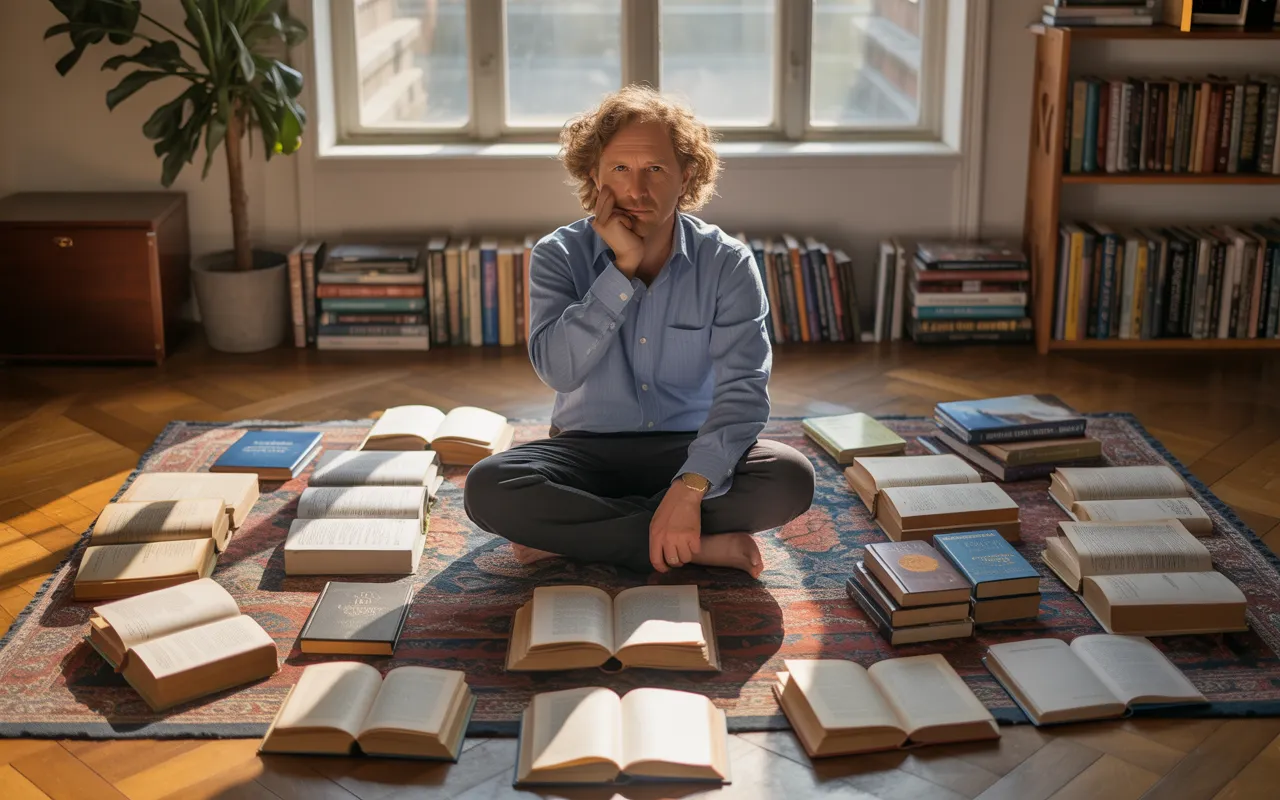
You might start devouring books on philosophy, religion, and spirituality. You may find yourself drawn to podcasts, documentaries, or conversations that touch on these deeper subjects.
This is a time of intellectual gathering. You explore different paths—Buddhism, Stoicism, mysticism, psychology—trying on different ideas to see what fits.
It’s an exciting phase, but it can also feel overwhelming. The sheer volume of information can lead to “spiritual materialism,” where the goal becomes acquiring knowledge rather than experiencing true inner change.
Stage 3: The Dark Night of the Soul
This is arguably the most challenging and misunderstood stage of the spiritual journey. After the initial excitement of awakening and exploration, you may fall into a period of profound disillusionment. This is the “Dark Night of the Soul,” a term coined by the 16th-century mystic St. John of the Cross.
It’s a state where your old identity is crumbling, but your new, more authentic self has not yet fully formed.
You feel lost, alone, and disconnected from both the material world and any sense of the divine. Old coping mechanisms no longer work, and spiritual practices may feel empty.
This is not the same as clinical depression, though they can coexist. It is a spiritual crisis, a necessary process of purification where the ego begins to surrender its grip. It is a sign that deep transformation is occurring beneath the surface.
Stage 4: Finding Your Practice and Tools
Emerging from the darkness, you realize that intellectual knowledge is not enough. You need to embody the wisdom you’ve been learning.
This stage is about moving from “knowing” to “doing.” You begin to find the specific practices and tools that resonate with you personally.
This could be:
- A daily meditation or mindfulness practice.
- A physical practice like yoga or qigong.
- Creative expression through art, music, or writing.
- Spending intentional time in nature.
- A prayer or gratitude practice.
The key is consistency. You commit to a regular practice, not because you expect immediate results, but because you recognize it as an essential anchor for your inner work. This practice becomes your personal laboratory for self-discovery.
Stage 5: The Initial Glimpses of Light
As you stick with your practice, you start to have small breakthroughs. These are not earth-shattering enlightenment experiences, but rather subtle shifts in perception.
You might experience a moment of profound peace during a meditation, a feeling of deep connection to nature on a walk, or a sudden insight into a lifelong pattern.
These glimpses are incredibly encouraging. They are the first fruits of your labor, providing tangible evidence that the journey is real and worthwhile.
They give you the strength and motivation to continue, especially when the path gets difficult again. This stage is about cultivating sensitivity to these quiet, sacred moments.
Stage 6: The Mentor and the Community
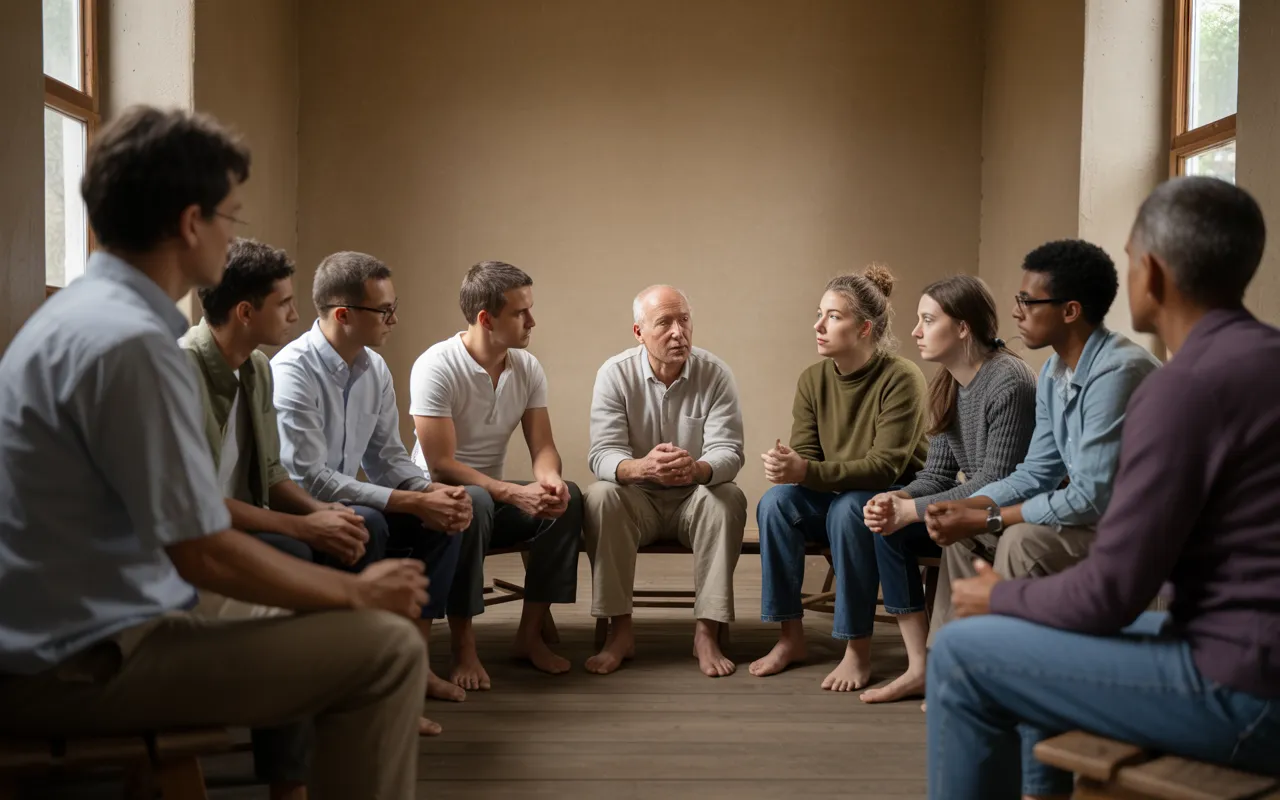
For a while, the spiritual journey can feel like a solitary endeavor. But at this stage, you often find yourself drawn to a teacher, a mentor, or a community of like-minded people. You realize you cannot do this work entirely on your own.
A good mentor is not someone who gives you all the answers, but someone who asks the right questions and holds a compassionate space for your own wisdom to emerge.
A healthy community provides support, reflection, and a sense of shared purpose. It reminds you that you are not alone on this path. This connection helps to ground your experiences and challenges you to grow beyond your personal limitations.
Stage 7: The Inner Work and Shadow Integration
With a solid practice and support system in place, you gain the courage to do the deepest and most difficult work: shadow integration. The “shadow,” a term from Jungian psychology, refers to the parts of ourselves that we have repressed or denied—our fears, insecurities, and darker impulses.
Spiritual bypassing is the tendency to use spiritual ideas and practices to avoid dealing with these uncomfortable parts of ourselves.
This stage is the antidote. It involves looking honestly at your own patterns, wounds, and contradictions with radical self-compassion.
It’s about bringing the darkness into the light not to judge it, but to understand and integrate it. This is where true healing and wholeness begin.
Stage 8: The Shedding of the Old Self
As you integrate your shadow, your old sense of self begins to dissolve more permanently. The ego, with its need for control, approval, and security, loses its dominance. You start to shed the identities, beliefs, and attachments that no longer serve you.
This can feel like another kind of death. You might outgrow friendships, change careers, or let go of long-held ambitions. It’s a process of simplification and purification.
You are stripping away everything that is not authentically you, making space for your true essence to shine through. This stage requires immense trust in the process, even when the future feels uncertain.
Stage 9: The Experience of Oneness and Interconnection
After the deep work of shedding and integration, you begin to experience a more abiding sense of unity. The glimpses of light from Stage 5 become a more constant state of being. You start to see the illusion of separation between yourself and the rest of the world.
You feel a deep, empathetic connection to other people, to animals, and to the planet itself. You recognize the divine spark in everyone and everything.
This is not just an intellectual concept; it is a felt reality. Your actions naturally become more compassionate and loving, because you understand that harming another is, in a way, harming yourself.

Stage 10: The Embodiment of Authenticity
At this stage, your inner state and your outer actions become fully aligned. You are no longer “practicing” being spiritual; you are simply being yourself. Your life becomes an authentic expression of your deepest values.
There is a sense of flow and effortlessness. You speak your truth with kindness, you set healthy boundaries without guilt, and you navigate life’s challenges with a newfound sense of grace and resilience.
You are not perfect, and you still experience human emotions, but you are no longer controlled by them. You live from a place of deep inner peace and integrity.
Stage 11: The Return and the Life of Service
The spiritual journey that begins as a quest for personal fulfillment ultimately leads to a desire to be of service to others. Having found a measure of peace and wisdom within, you naturally want to share it. This is the “return” phase of the hero’s journey.
Service can take many forms. It doesn’t necessarily mean becoming a spiritual teacher. It could be:
- Being a more present and loving parent or partner.
- Bringing more compassion and integrity to your workplace.
- Volunteering for a cause you believe in.
- Creating art that inspires and uplifts others.
The service comes not from a sense of duty or a need for recognition, but from an overflow of love and gratitude. It is the natural expression of a connected heart.
Stage 12: The Cycle of Continual Growth
There is no final destination on the spiritual journey. Enlightenment is not a one-time achievement but a continuous process of unfolding. This final stage is the recognition that life itself is the practice. You are always a student.
You will continue to be challenged, you will continue to learn, and you will continue to grow.
You may cycle back through earlier stages, like the Dark Night of the Soul, but each time you approach them with greater wisdom, compassion, and trust. You embrace life in its entirety—the joy and the sorrow, the light and the dark—as part of a beautiful, sacred dance.
Navigating Your Own Spiritual Journey
This 12-stage model is a map, not the territory itself. Your journey will have its own unique twists and turns. The most important thing is to walk your path with patience, courage, and an open heart.
Remember that this is not a race. It is a slow, organic unfolding. Trust your own inner guidance, honor the stage you are in, and be kind to yourself through the process.
The very act of seeking, of asking the deep questions, is a sacred act. The spiritual journey is not about arriving at a destination; it’s about learning to live fully and authentically in each and every moment.