We are accustomed to thinking of healing in physical terms. When we break a bone, we get a cast. When we have an infection, we take antibiotics. But what about the wounds that don’t show up on an x-ray? What about the deep sense of disconnection, grief, or meaninglessness that can persist even when our physical bodies are perfectly healthy?
This is the realm of spiritual healing. It’s a concept that can feel abstract or mysterious, often associated with ancient traditions or esoteric practices. Yet, at its core, spiritual healing is a deeply human process of mending the parts of ourselves that lie beyond the physical—our spirit, our energy, and our connection to life itself.
It’s not about magic or superstition. It’s a holistic approach to well-being that recognizes that our spiritual health is just as important as our mental and physical health. It operates on the principle that many of our deepest struggles—from anxiety to chronic unease—stem from a disconnection from our authentic selves.
This guide will demystify the concept of spiritual healing. We will explore what it truly means, the various forms it can take, how it works, and how you can begin to integrate its principles into your own life. This is an invitation to look beyond the surface and explore a path to a more profound and lasting sense of wholeness.
What is Spiritual Healing?
Spiritual healing is any practice that aims to restore balance and harmony to a person’s spirit or soul. It works from the inside out, addressing the root causes of our suffering rather than just managing the symptoms. While physical medicine treats the body and psychology treats the mind, spiritual healing addresses the energetic and existential dimensions of our being.
The fundamental premise is that we are more than just our bodies and our thoughts. We have an energetic field, a life force (often called chi, prana, or spirit) that flows through us. When this energy is blocked, stagnant, or depleted due to trauma, stress, or grief, it manifests as emotional, mental, and even physical dis-ease.
Spiritual healing, therefore, is the process of clearing these blockages and restoring the natural flow of our life force energy. It is not about “fixing” a broken person. Instead, it is based on the idea that we are already whole and complete at our core. The healing comes from removing the layers of fear, conditioning, and pain that obscure this innate wholeness.
It is crucial to understand that spiritual healing is not a replacement for conventional medicine or psychotherapy. It is a complementary approach that can work in harmony with other treatments to support a person’s overall well-being.
The Core Principles of How Spiritual Healing Works
While the methods of spiritual healing are diverse, they are all built upon a few shared core principles. Understanding these principles is key to grasping how this form of healing operates.
The Principle of Interconnection
Spiritual healing is grounded in the understanding that everything is interconnected. Our minds, bodies, and spirits are not separate systems; they are a unified whole. A spiritual wound can manifest as a physical ailment, and a physical illness can create a spiritual crisis. Healing one area inevitably affects the others.
This principle extends outward. We are also interconnected with each other and with the natural world. Spiritual healing often involves mending our sense of connection to the greater web of life.
The Principle of Energy
Everything in the universe is energy, vibrating at different frequencies. Our thoughts, emotions, and physical bodies are all forms of energy. Positive, loving emotions like joy and gratitude have a high, light frequency. Negative, fear-based emotions like anger and shame have a low, dense frequency.
Spiritual healing works by introducing a higher vibrational energy into a person’s system. This can be done through the hands of a healer, through sound, or through the person’s own intention. This higher frequency helps to break up and release the lower, denser energies of trauma and pain.
The Principle of Consciousness
Spiritual traditions have long taught that consciousness is the fundamental reality. Our thoughts and beliefs shape our experience of the world. If you believe you are unworthy, you will attract experiences that validate that belief.
Spiritual healing involves a shift in consciousness. It helps a person to identify and release limiting beliefs that are creating suffering. By changing your inner world, you begin to change your outer reality. Healing is, in many ways, an awakening to a new level of awareness.

Common Forms of Spiritual Healing
Spiritual healing is not a one-size-fits-all practice. There are countless modalities, each with a unique approach. Here are some of the most well-known and practiced forms.
Energy Healing (Reiki, Healing Touch)
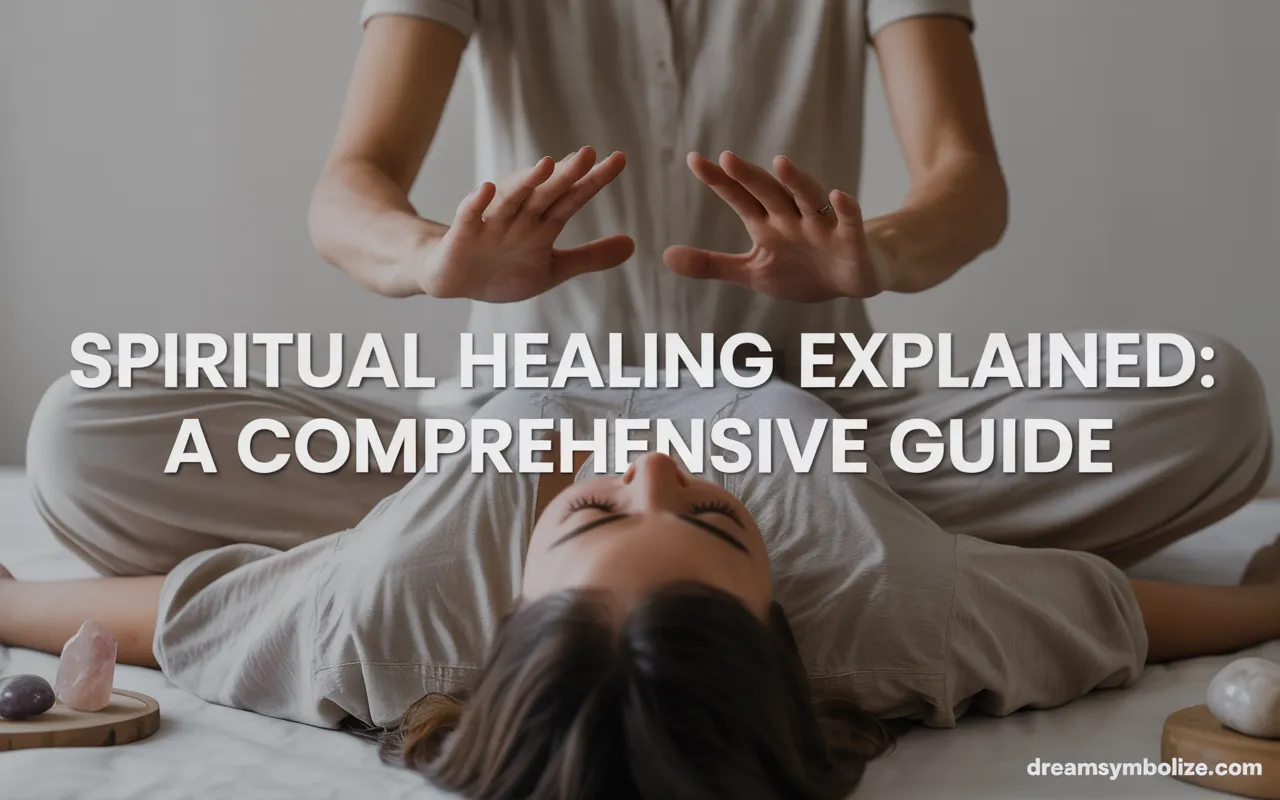
This is perhaps the most common form of spiritual healing in the modern West. Modalities like Reiki and Healing Touch are based on the principle that a practitioner can channel universal life force energy into a client to facilitate healing.
During a session, the client typically lies fully clothed on a massage table while the practitioner places their hands lightly on or just above the body in various positions. The practitioner is not using their own personal energy, but acting as a conduit for a higher source of healing energy. Clients often report feeling deep relaxation, warmth, or tingling sensations, and a profound sense of peace.
Sound Healing
Sound healing uses the power of vibration to restore balance to the body’s energy centers. It is based on the idea that every cell in our body has a resonant frequency, and that stress and disease can cause these frequencies to fall out of tune.
Practitioners use instruments like crystal singing bowls, tuning forks, gongs, or chanting to create specific frequencies that entrain the body’s cells back into a state of harmony. A “sound bath” is a popular form where participants lie down and are “bathed” in the healing sounds, leading to a deep meditative and restorative state.
Shamanic Healing
Shamanism is one of the oldest spiritual practices on Earth, found in indigenous cultures all over the world. A shaman is someone who can journey into non-ordinary reality or “spirit worlds” to retrieve information, healing, or lost parts of a person’s soul.
A common shamanic practice is “soul retrieval.” It is believed that when we experience trauma, a part of our soul or life force can fragment and leave the body to survive the experience. This can leave us feeling empty, depressed, or incomplete. The shaman journeys to find this lost soul part and brings it back, helping the person to feel whole and integrated again.
Prayer and Intention
Prayer is a form of spiritual healing that has been practiced for millennia in virtually every culture. It is the act of communicating with a higher power, whether that is called God, the Universe, or a divine source. Prayer can be a request for help, an expression of gratitude, or simply a way of surrendering one’s burdens.
Setting a powerful, focused intention is a related practice. It involves consciously directing your thoughts and energy toward a desired healing outcome. This aligns your personal consciousness with the creative force of the universe to manifest healing in your life.
Connecting with Nature (Ecotherapy)
Nature is a powerful spiritual healer. Spending time in natural environments—a practice sometimes called ecotherapy or forest bathing—has been scientifically shown to reduce stress, lower blood pressure, and improve mood.
On a spiritual level, nature helps us reconnect with the cycles of life, death, and rebirth. It grounds our energy, quiets the noise of the ego-mind, and reminds us that we are part of something vast, ancient, and beautiful. The simple act of walking barefoot on the earth or sitting by the ocean can have profound healing effects.

What Can Spiritual Healing Help With?
Spiritual healing can address a wide range of issues because it works on the energetic root of our problems. It is not intended to cure specific diseases, but to restore the overall balance that allows the body’s own healing intelligence to function optimally.
People often seek spiritual healing for:
- Emotional Wounds: Grief, heartbreak, and unresolved anger from the past.
- Trauma: Releasing the energetic imprint of traumatic events from the body and psyche.
- Anxiety and Depression: Alleviating the existential dread and sense of disconnection that often underlie these conditions.
- Feeling Lost or Stuck: Finding clarity of purpose and direction in life.
- Chronic Pain and Fatigue: While not a substitute for medical care, spiritual healing can help address the energetic and emotional components that often contribute to physical ailments.
- Limiting Beliefs: Overcoming deep-seated feelings of unworthiness, shame, or fear.
Navigating a Spiritual Healing Journey
If you feel called to explore spiritual healing, it’s important to approach the journey with awareness and discernment.
Finding a Practitioner
The field of spiritual healing is largely unregulated, so it’s crucial to find a practitioner you trust.
- Get Referrals: Ask for recommendations from friends or trusted sources.
- Check Their Training: Look for practitioners who have completed reputable training programs and have experience.
- Trust Your Gut: Schedule a brief consultation call. How do you feel when you talk to them? Do they feel grounded, compassionate, and ethical? Your intuition is your best guide. A good healer will empower you, not create dependency.
What to Expect in a Session
While every session is different, there are some common elements. Most sessions begin with a conversation where you can share what you’re hoping to work on. The healing itself is often done while you are lying down comfortably.
You do not need to “do” anything during the session except be open to receiving the healing. It’s normal to feel a range of sensations—from warmth and tingling to emotional releases like crying or laughter. It’s also normal to feel nothing at all during the session itself; the effects can often unfold in the days and weeks that follow.
The Healing Crisis
Sometimes, after a powerful healing session, you might experience what is known as a “healing crisis.” This is when old, suppressed emotions or physical symptoms temporarily flare up as they are being released from your system. It can feel like you’re getting worse before you get better. This is a normal part of the detoxification process. It’s important to be gentle with yourself, drink plenty of water, and rest.
The Role of Self-Healing
While a practitioner can act as a powerful catalyst, true and lasting healing is ultimately a journey of self-healing. A healer can clear your energy field, but it is up to you to maintain it through your own practices and choices.
Practices that support your own spiritual healing journey include:
- Meditation: To quiet the mind and connect with your inner self.
- Journaling: To process emotions and gain clarity.
- Mindfulness: To stay present and aware in your daily life.
- Healthy Boundaries: To protect your energy from draining situations and people.

Integrating Spiritual Healing into Your Life
Spiritual healing is not a one-time fix. It is an ongoing process of tending to your inner garden. It’s a commitment to living a more conscious and authentic life.
The ultimate goal is to become your own healer. It’s about learning to listen to the wisdom of your body, to honor the messages of your emotions, and to trust the guidance of your intuition. It’s about developing a relationship with yourself that is so loving and compassionate that you no longer need to look outside for validation or peace.
As you engage in this process, you may find that the world around you doesn’t necessarily change, but your experience of it does. You become less reactive and more resilient. You find joy in simple things. You feel a deep sense of connection to yourself and to the world.
Conclusion: Reclaiming Your Innate Wholeness
Spiritual healing is a journey back home to yourself. It is a path of remembering the luminous, unbreakable essence that resides at your core, beneath all the layers of pain, fear, and conditioning.
It asks us to be brave enough to look at our wounds, not as signs of brokenness, but as sacred portals to our own growth and transformation. It offers a profound truth: you don’t need to be fixed, because you were never truly broken. You simply need to be reminded of the magnificent, whole, and divine being you have always been.
Whether you choose to work with a practitioner or simply begin your own practice of self-healing, know that the desire to heal is the first and most important step. It is your soul calling you forward, inviting you to step into a more vibrant, authentic, and joy-filled way of life.