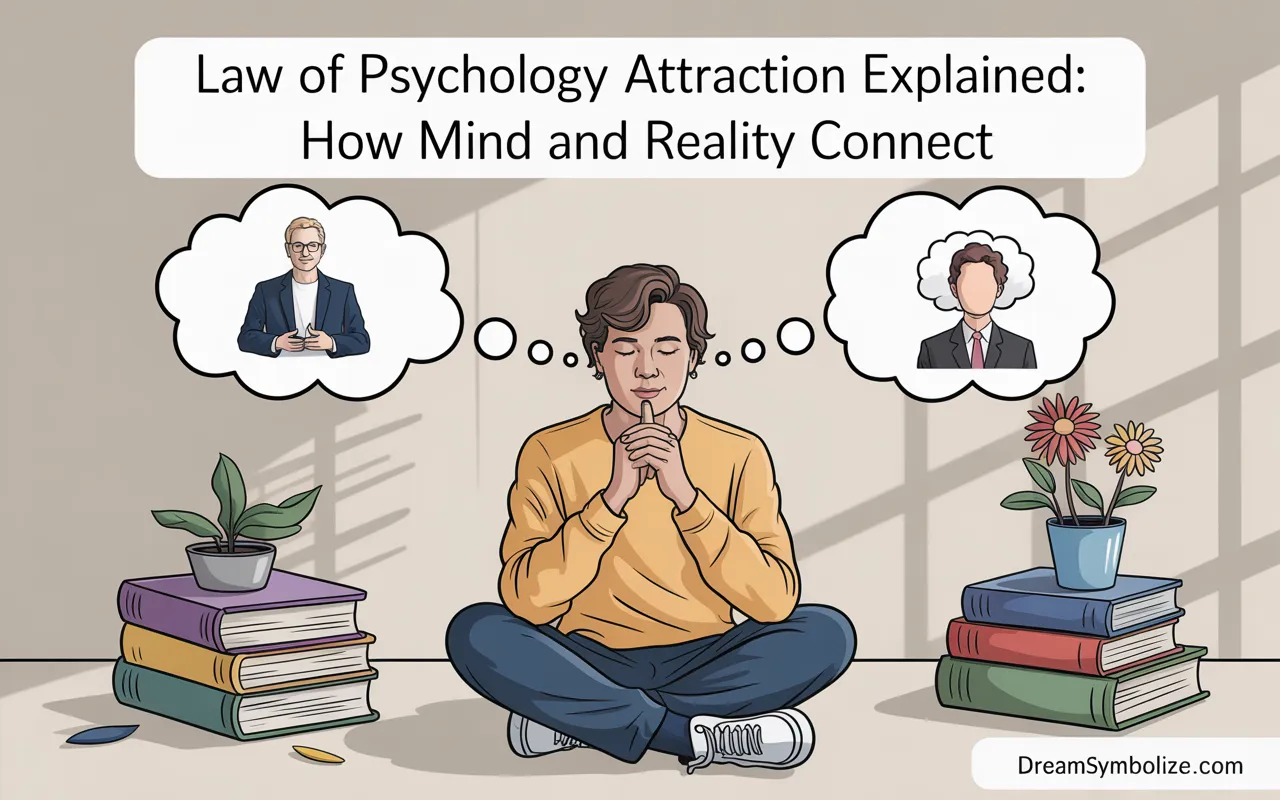
The phrase “Law of Attraction” often conjures images of mystical forces and cosmic ordering. It’s a philosophy that suggests our thoughts can directly shape our reality, attracting positive or negative experiences based on our focus.
While this concept can be powerful, it is frequently met with skepticism, and for good reason. The more spiritual interpretations can seem far-fetched and lack scientific grounding.
But what if we strip away the metaphysical language? What if we examine this phenomenon through the lens of psychology? When we do, we find that the observable effects of the Law of Attraction have strong, evidence-based explanations rooted in how our brains are wired. The connection between mind and reality might not be magic, but it is deeply real and scientifically observable.
This guide will explain the psychology of attraction, breaking down the cognitive and behavioral mechanisms that link our internal world to our external outcomes.
We will explore how our beliefs shape our perception, how our focus dictates our opportunities, and how our mindset can create self-fulfilling prophecies.
This is not about wishing your way to success; it’s about understanding the powerful psychological tools you already possess.
The Brain’s Gatekeeper: The Reticular Activating System (RAS)
One of the most powerful psychological explanations for the Law of Attraction lies in a small but mighty part of your brainstem called the Reticular Activating System (RAS). The RAS acts as a sophisticated filter or a bouncer for your conscious mind.
Your brain is bombarded with billions of bits of information every second—sights, sounds, smells, and sensations. It’s impossible to process it all.
The RAS’s job is to sift through this noise and decide what is important enough to bring to your conscious attention.
And how does it decide what’s important? It listens to you. It pays attention to what you focus on, what you believe, and what you tell it matters.
How the RAS Creates Your “Reality”
Have you ever decided to buy a specific model of car, and then suddenly you start seeing that exact car everywhere? They didn’t just magically appear on the road. They were always there, but your RAS was filtering them out as irrelevant. Once you told your brain, “This is important to me,” your RAS got the memo and started highlighting every instance of that car.
This is the Law of Psychology Attraction in action. When you use Law of Attraction techniques like setting clear goals or creating vision boards, you are essentially giving your RAS a new set of instructions.
- If you focus on “finding new business opportunities,” your RAS will start to notice relevant conversations, articles, and networking events that you would have otherwise ignored.
- If you focus on “the kindness of people,” your RAS will highlight the stranger holding a door or the friendly cashier, while filtering out minor annoyances.
Your reality doesn’t magically change; your perception of it does. You begin to see the opportunities and positive aspects that were always present, but previously invisible to you.
The Power of Belief: Confirmation Bias and Self-Fulfilling Prophecies
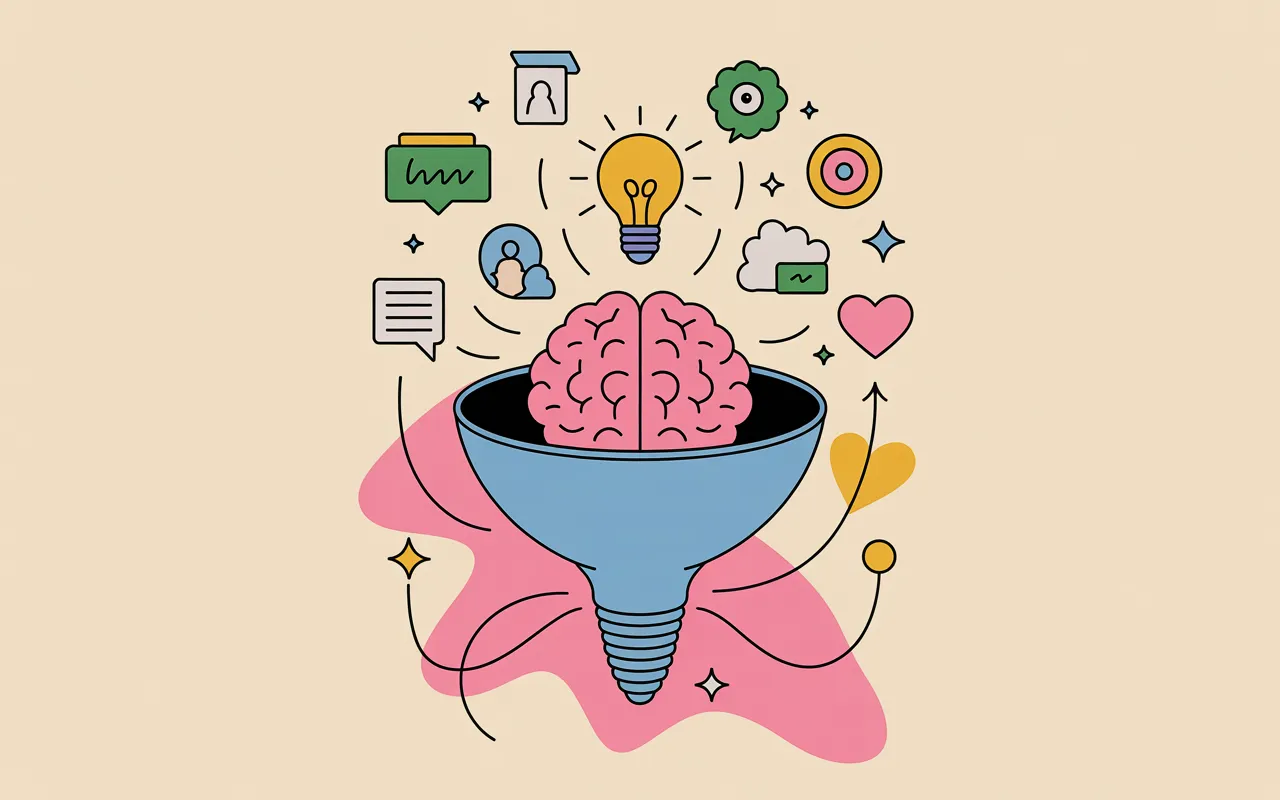
Our beliefs are not just idle thoughts; they are the operating system for our reality. Two powerful cognitive biases explain how our beliefs directly influence the life we experience: confirmation bias and the self-fulfilling prophecy.
Confirmation Bias: We See What We Believe
Confirmation bias is the natural human tendency to search for, interpret, favor, and recall information in a way that confirms our pre-existing beliefs. Your brain likes to be right, so it actively seeks out evidence to prove its own theories about the world.
If you hold the belief that “making money is hard,” your brain will diligently collect evidence to support this. It will notice the rejections, the failed ventures, and the economic downturns. It will conveniently ignore the stories of successful entrepreneurs or the opportunities for growth.
The Law of Attraction encourages practitioners to consciously choose empowering beliefs. When you adopt the belief that “I am capable and resourceful,” your brain, thanks to confirmation bias, will start looking for proof.
It will remember your past successes, notice your skills, and interpret challenges as learning opportunities rather than failures. You are not changing the world; you are changing the evidence your brain chooses to focus on.
The Self-Fulfilling Prophecy: Acting Your Beliefs into Existence
A self-fulfilling prophecy is a belief or expectation that influences your behavior in a way that makes the expectation come true.
- Example 1 (Negative): A student believes they are “bad at math.” Because of this belief, they don’t study as hard, are afraid to ask questions in class, and get anxious during tests. Their behavior leads to a poor grade, which then “proves” their original belief.
- Example 2 (Positive): A person believes they are likable and good at networking. At a party, they act with confidence, smile openly, and initiate conversations. This warm behavior causes others to respond positively, reinforcing their belief that they are likable.
The Law of Attraction’s emphasis on “acting as if” is a direct application of creating a positive self-fulfilling prophecy.
When you act with the confidence of someone who has already achieved their goal, you change your posture, your tone of voice, and your willingness to take risks.
This altered behavior elicits different responses from the world, which can lead to the very outcomes you were aiming for.
The Motivational Component: Goal Setting and Dopamine
A huge part of the Law of Attraction is focusing on what you want. From a psychological perspective, this is simply effective goal-setting, a practice proven to increase motivation and performance. When you define a clear and compelling goal, you engage your brain’s reward system.
Priming the Brain for Success
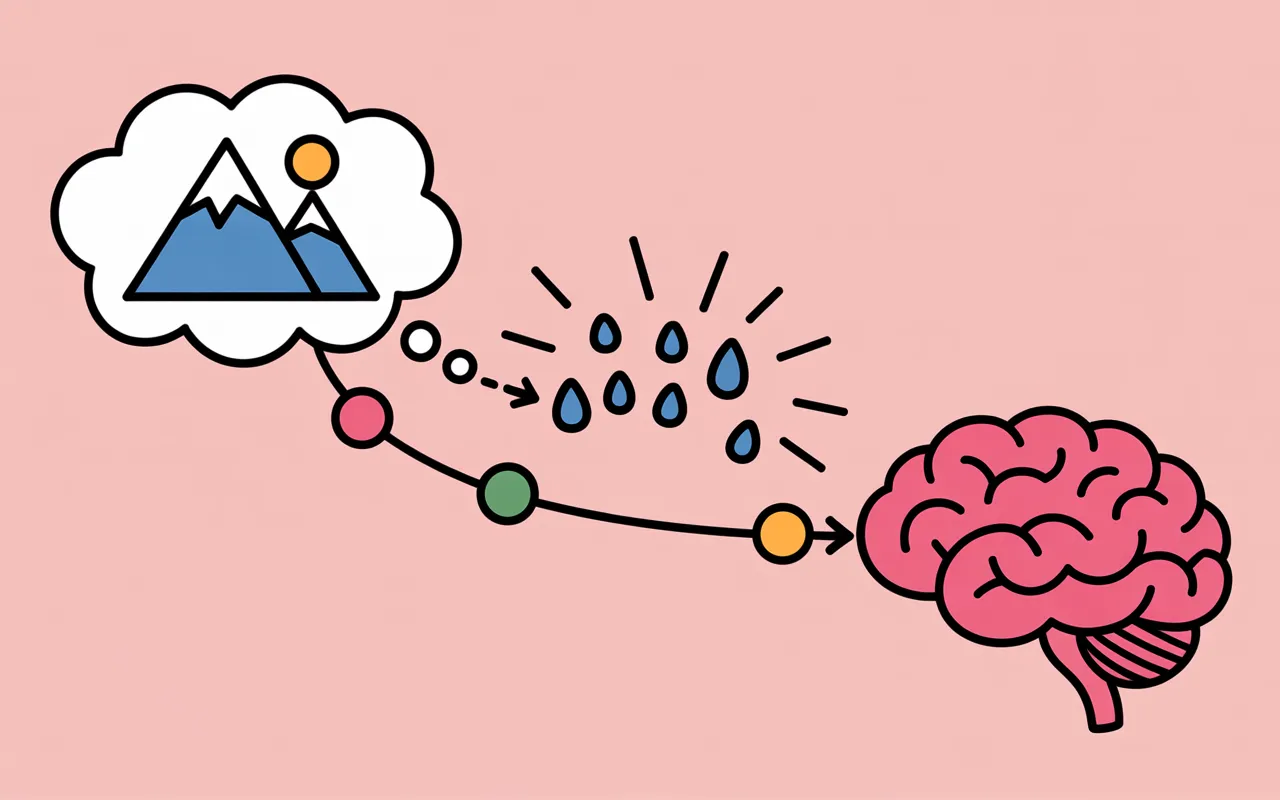
Thinking about and visualizing a positive future outcome releases dopamine in the brain. Dopamine is a neurotransmitter associated with motivation, pleasure, and reward.
When you visualize success, your brain gives you a small “hit” of dopamine, which feels good and motivates you to take the actions necessary to get more of that feeling.
This creates a powerful neurological loop:
- You visualize your goal (e.g., crossing the finish line of a marathon).
- Your brain releases dopamine, creating a feeling of pleasure and motivation.
- This motivation encourages you to take action (e.g., go for a run).
- Taking action moves you closer to your goal, reinforcing the cycle.
This process explains why visualization is a key training tool for elite athletes and high-performers. It’s not magic; it’s mental rehearsal. It primes the brain and body for success, making you more likely to put in the necessary effort.
The Emotional Factor: How Mood Affects Behavior and Cognition
The Law of Attraction places enormous emphasis on feeling good. Proponents claim that a high “vibration” attracts positive outcomes. Psychologically, this holds true, though for different reasons. Your emotional state has a profound impact on your cognitive functions and your behavior.
Broaden-and-Build Theory
Psychologist Barbara Fredrickson’s “broaden-and-build” theory suggests that positive emotions (like joy, interest, and contentment) broaden our scope of attention and thought-action repertoires.
- When you are in a positive mood, you are more creative, better at problem-solving, and more open to new experiences. Your mind is literally more expansive.
- When you are in a negative mood (like fear or anxiety), your focus narrows. This is a survival mechanism designed to help you focus on an immediate threat.
A person who cultivates positive emotions is, from a cognitive standpoint, better equipped to see solutions, come up with new ideas, and connect with others.
This broadened perspective naturally leads to more “positive outcomes” because they are simply able to perceive and act on a wider range of possibilities.
Emotional Contagion
Humans are social creatures, and we unconsciously mirror the emotions of those around us. This is called emotional contagion. If you consistently enter situations with a positive, open, and friendly demeanor, others are more likely to mirror that emotional state back to you.
This explains why “positive people” seem to have better interactions. Their emotional state is contagious, creating a more pleasant social environment around them. This isn’t the universe rewarding them; it’s a basic function of human social dynamics.
The Behavioral Science of “Letting Go”
One of the most paradoxical parts of the Law of Attraction is the concept of “detachment” or “letting go.” Practitioners are told to want something but not need it. This can be explained by the psychology of performance anxiety and cognitive load.
The Problem with Overthinking
When you are desperately attached to an outcome, you tend to overthink, micromanage, and stress about it. This creates a state of high cognitive load and performance anxiety. We’ve all experienced this: the more you try to force yourself to fall asleep, the more awake you become.
The more you stress about saying the right thing on a date, the more likely you are to stumble over your words.
This is because the prefrontal cortex (the “thinking” part of the brain) can interfere with the more automated, intuitive processes governed by other brain regions. Athletes call this “choking under pressure.”
Finding a State of Flow
“Letting go” is the act of reducing this cognitive load. It’s a form of trust in your own abilities and in the process. When you set your intention and then release the desperate need to control every step, you free up mental resources.
This allows you to enter a “flow state,” where you are fully immersed and energized, and performance feels effortless.
By detaching from the outcome, you are not giving up. You are simply getting out of your own way, allowing your subconscious mind and intuitive abilities to guide your actions more effectively.

Practical Applications: Bridging the Gap
So, how can you use this psychological understanding of attraction in a practical, grounded way?
1. Program Your RAS Intentionally: Don’t leave your brain’s filter on autopilot. Start each day by clearly defining what you want to focus on. Write down your top three goals. This simple act tells your RAS what to look for, priming you to notice relevant opportunities throughout the day.
2. Conduct a Belief Audit: Take time to identify your limiting beliefs. Pick an area of your life where you feel stuck and ask yourself, “What do I believe is true about this?” Once you’ve identified a negative belief, actively search for counter-evidence. Find examples of people who have succeeded, or times when you yourself have defied that belief.
3. Practice Gratitude to Broaden Your Mindset: The psychological benefits of gratitude are well-documented. It reduces stress, improves mood, and fosters resilience. Start a gratitude journal and write down three specific things you are thankful for each day. This trains your brain to scan for the positive, leveraging confirmation bias for your benefit.
4. Use Visualization as Mental Rehearsal: Instead of just daydreaming, use visualization as a tool for practice. If you have a presentation, visualize yourself delivering it confidently and effectively. If you have a difficult conversation to have, rehearse it going well in your mind. This builds neural pathways and reduces anxiety, making a positive outcome more likely.
Conclusion: The Power Is in Your Perception
The Law of Psychology Attraction is not about magically bending reality to your will. It is about understanding that your mind is the lens through which you experience reality. By consciously choosing your focus, challenging your beliefs, and managing your emotional state, you can fundamentally change that lens.
When you do this, the world doesn’t change, but your experience of it does. You start to see opportunities where you once saw obstacles. You notice reasons for gratitude where you once saw lack. You take confident action where you once hesitated in fear.
This is where the mind and reality connect. The power of the Law of Attraction lies not in some external, mystical force, but in the incredible, scientifically-validated power of your own mind to shape your perception, guide your behavior, and ultimately, create your life. The real secret is that the architect of your experience has been you all along.