We often chase a specific definition of success. It might involve a certain job title, a particular house, or a number in a bank account. We build our lives around achieving these external milestones, believing they hold the key to happiness. Yet, many who reach these goals find themselves feeling surprisingly empty, wondering, “Is this really it?”
This quiet sense of dissatisfaction is a sign that something deeper is calling for our attention. It’s an invitation to shift our focus from what we have to who we are. This is the starting point for cultivating a spiritual lifestyle.
The term “spiritual lifestyle” might bring to mind images of renouncing all possessions or living in a remote monastery. But in reality, it is far more practical and accessible. It’s not about changing your entire life overnight, but about changing the way you show up for the life you already have. It is the conscious choice to live with more intention, awareness, and connection.
This guide is designed to demystify the spiritual lifestyle. We will explore what it means to live this way, the profound benefits it offers, and the practical steps you can take to infuse your daily existence with more meaning, peace, and mindful presence.
What is a Spiritual Lifestyle?
A spiritual lifestyle is an approach to life where your daily choices—from how you spend your money to how you speak to others—are guided by your inner values and a desire for a deeper connection to yourself and the world. It’s about moving off autopilot and bringing conscious awareness to every aspect of your being.
This lifestyle is not defined by a specific religion or dogma. It is a personal and internal orientation. It’s the difference between simply eating a meal and mindfully savoring each bite with gratitude. It’s the difference between reacting to a stressful situation with anger and pausing to respond with intention.
At its core, living a spiritual lifestyle involves:
- Mindfulness: Paying attention to the present moment without judgment.
- Intention: Knowing your “why” and letting it guide your actions.
- Connection: Fostering a relationship with your inner self, with others, and with nature or a higher power.
- Growth: Viewing life as a journey of learning and evolution, rather than a series of problems to be solved.
Ultimately, a spiritual lifestyle is about closing the gap between the person you present to the world and the person you are at your core. It is the path to authenticity.
Why Adopt a Spiritual Lifestyle? The Benefits
Choosing to live more mindfully is not just an abstract ideal; it yields tangible benefits that can transform your experience of life. In a culture grappling with record levels of anxiety and burnout, these benefits have never been more relevant.
Deeper Resilience and Inner Peace
A spiritual lifestyle builds an internal anchor. When you cultivate a strong inner core, you are less shaken by external events like job loss, relationship challenges, or health scares. You develop a baseline of peace that doesn’t depend on your circumstances being perfect.
Authentic Relationships
When you stop looking to others for validation, your relationships transform. You move from a place of neediness to a place of genuine connection. You become a better listener and a more compassionate friend because you are more at peace with yourself.
A Clear Sense of Purpose
Living spiritually helps you cut through the noise of what society tells you to want and connect with what truly brings you joy and meaning. This clarity of purpose is a powerful motivator, infusing your days with energy and direction.
Improved Mental and Physical Health
The practices associated with a spiritual lifestyle, such as meditation and mindfulness, have been scientifically shown to reduce stress, lower blood pressure, improve sleep, and boost immune function. By calming the mind, you calm the body.

The Pillars of a Spiritual Lifestyle
A spiritual lifestyle is built upon several foundational pillars. Think of these as the core areas of focus for bringing more mindfulness into your life.
1. The Inner World: Your Mind and Emotions
This is the starting point. It involves cultivating self-awareness, learning to manage your thoughts and emotions, and developing a strong connection to your intuition. Without a healthy inner world, it is difficult to show up authentically in the outer world.
2. The Physical World: Your Body and Environment
Your body is the vessel for your spirit, and your environment profoundly affects your energy. This pillar involves treating your body with respect, nourishing it with healthy food, and creating a living space that feels peaceful and supportive.
3. The Relational World: Your Connections with Others
We are social creatures. A spiritual lifestyle is not lived in isolation. This pillar focuses on bringing consciousness to your relationships—practicing empathy, setting healthy boundaries, and communicating with kindness and honesty.
4. The Outer World: Your Work and Contribution
This pillar is about how you express your purpose in the world. It involves finding or creating work that aligns with your values and finding ways to be of service to others, whether in grand gestures or small, daily acts of kindness.
Practical Steps to Cultivate a Spiritual Lifestyle
You don’t need to make drastic changes to begin. A spiritual lifestyle is built through small, consistent habits that accumulate over time. Here are practical ways to start nurturing each pillar.
Cultivating Your Inner World
Practice Daily Stillness
Your inner wisdom cannot be heard over the noise of constant distraction. Stillness is not an empty luxury; it is a necessity for spiritual connection.
- How to do it: Begin with 5-10 minutes of meditation each morning. Simply sit quietly, close your eyes, and focus on the sensation of your breath. When your mind wanders, gently guide it back. Apps like Headspace or Calm can be helpful for beginners.
Become a Student of Your Emotions
Many of us either suppress our difficult emotions or are completely controlled by them. The spiritual path is a middle way: observing your emotions with compassionate curiosity.
- How to do it: When a strong emotion like anger or sadness arises, pause. Name the feeling (“This is anger”). Notice where you feel it in your body (a tight chest, a hot face). Breathe into that sensation without judgment. This practice, known as mindfulness of emotion, builds immense emotional intelligence.
Journal for Clarity
Writing is a powerful way to untangle the knots in your mind. It externalizes your thoughts, allowing you to see patterns and connect with your own inner guidance.
- How to do it: Try “Morning Pages”—writing three pages of whatever is on your mind as soon as you wake up. Don’t censor or edit. This practice clears the mental clutter and makes space for deeper insights to emerge.
Nurturing Your Physical World
Eat Mindfully
Food is energy. What you eat and how you eat it has a direct impact on your spiritual vitality.
- How to do it: For one meal a day, turn off all screens. Pay attention to the colors, smells, and textures of your food. Chew slowly. Offer a moment of gratitude for the nourishment and for all the hands that brought the food to your plate.
Create a Sacred Space
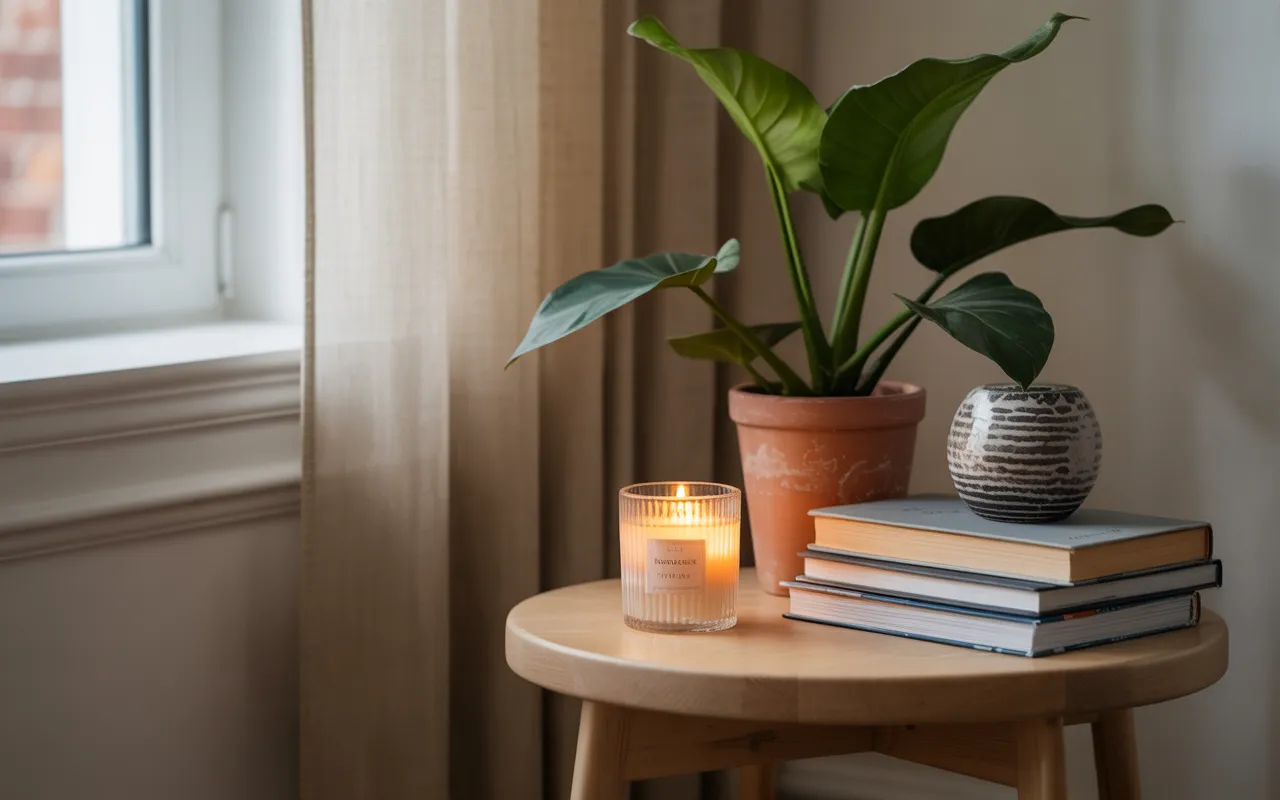
Your home environment should be a sanctuary that recharges you. Creating a small, dedicated space for your practice can serve as a powerful anchor.
- How to do it: Find a small corner or shelf. Keep it clean and place items on it that feel sacred to you—a candle, a plant, a meaningful photo, or a special stone. Spend a few minutes at this space each day.
Move with Intention
Exercise can be more than just a physical chore; it can be a spiritual practice.
- How to do it: Reframe your workout. Instead of focusing on burning calories, focus on the feeling of being alive in your body. Practice yoga with an emphasis on breath, go for a “gratitude walk” where you notice all the things you appreciate in your surroundings, or put on music and dance freely.
Tending to Your Relational World
Practice Deep Listening
One of the greatest gifts you can give another person is your full, undivided attention.
- How to do it: The next time you are in a conversation, put your phone away. Resist the urge to plan your response while the other person is talking. Listen with the intent to understand, not just to reply. Notice their body language and the emotion behind their words.
Communicate with Compassion
The words you use have the power to create connection or division. A spiritual lifestyle involves choosing your words consciously.
- How to do it: Before speaking, especially in a conflict, ask yourself three questions: Is it true? Is it kind? Is it necessary? Practice using “I” statements (“I feel hurt when…”) instead of “you” statements (“You always…”).
Set Healthy Boundaries
Boundaries are not walls to keep people out; they are fences that protect your inner peace. They are a form of self-respect and are essential for any healthy relationship.
- How to do it: Learn to say “no” graciously to requests that drain your energy or violate your values. Communicate your needs clearly and kindly. Remember that “no” is a complete sentence.
Engaging with the Outer World
Align Your Work with Your Values
For many, work is the place we spend the majority of our time. Finding ways to bring your spiritual values into your work is crucial.
- How to do it: You may not need to quit your job. Look for ways to bring more integrity, kindness, or service into your current role. Focus on being a supportive colleague or doing your tasks with a high level of presence and excellence. If your job fundamentally violates your values, you can begin to explore a transition.
Practice Generosity
A spiritual lifestyle moves us from a mindset of scarcity to one of abundance. Generosity is the natural expression of this shift.
- How to do it: Generosity is not just about money. Be generous with your time, your praise, and your attention. Mentor someone, share your knowledge freely, or compliment a stranger.

Common Misconceptions About a Spiritual Lifestyle
The path to mindful living is often obscured by common myths. Let’s clear a few of them up.
Myth 1: You have to be religious.
A spiritual lifestyle is non-denominational. It is about universal human values like kindness, presence, and connection. It can deepen a religious faith, but it does not require one.
Myth 2: It means being positive all the time.
Spiritual living is not about “positive vibes only.” It is about being authentic. It means having the courage to face your difficult emotions—your anger, your sadness, your fear—with compassion, rather than pretending they don’t exist.
Myth 3: It is self-indulgent.
True spiritual practice is the opposite of selfish. By healing yourself and finding inner peace, you become a more stable and loving presence for your family, your community, and the world. You cannot serve from an empty cup.
Conclusion: An Invitation to Live More Deeply
Adopting a spiritual lifestyle is not about becoming a different person. It is about becoming more fully yourself. It is a gentle, ongoing process of shedding the layers of who you are not, to reveal the centered, compassionate, and joyful being that has been there all along.
It is a journey, not a destination. There will be days of profound clarity and days of frustrating struggle. The key is to approach the path with kindness and persistence.
Start today. Don’t wait for the “right” time or a life-altering crisis. Choose one small practice from this guide—perhaps a five-minute morning meditation or a mindful meal—and commit to it. This simple act of intention is the first step on a path that leads not to a new life, but to a deeper and more meaningful experience of the one you are already living.