
For years, the concept of manifestation has been wrapped in a shroud of mysticism. It has been sold as a secret of the universe, a spiritual law, or a magical ability to attract wealth and love simply by thinking about them. While these spiritual interpretations are compelling to many, they often alienate those who prefer a more grounded, evidence-based approach to life.
But what if manifestation isn’t magic at all? What if the reason it works for so many people is rooted not in the stars, but in the synapses of the human brain?
The truth is, modern psychology and neuroscience offer robust explanations for why practices like visualization, affirmation, and goal-setting actually work. When you strip away the metaphysical language, manifestation reveals itself as a powerful cognitive tool—a way of harnessing the brain’s natural filtering and goal-seeking mechanisms to shape reality.
This guide explores the psychology of manifestation. We will leave the crystals and moon phases aside for a moment to look under the hood of the human mind. By understanding the science behind the process, you can move from “hoping it works” to understanding why it works, giving you a practical, repeatable framework for achieving your goals.
The Cognitive Engine: The Reticular Activating System (RAS)
If there is one piece of biology that explains the “magic” of manifestation, it is the Reticular Activating System (RAS). Located at the base of the brainstem, this bundle of nerves plays a critical role in consciousness and motivation.
Your brain is constantly bombarded with millions of bits of sensory data every second—sights, sounds, smells, and sensations. If you consciously processed all of it, your brain would short-circuit. The RAS acts as a gatekeeper. It filters out the noise and only lets through what it deems important.
But how does it know what is important? It listens to you.
How the RAS Creates Your Reality
When you focus intensely on a specific goal—say, buying a specific model of a car—you are programming your RAS. You are telling your brain, “This car is important.” Suddenly, you start seeing that car everywhere on the highway.
The cars were always there. Your eyes saw them, but your brain filtered them out as irrelevant background noise. Once you set the intention, the RAS changed the filter.
In manifestation, this is often interpreted as the universe sending you signs. Psychologically, it is known as the “Baader-Meinhof phenomenon” or frequency illusion. By setting a clear intention (manifesting), you prime your RAS to scan your environment for opportunities, resources, and people that align with that goal. You aren’t creating these opportunities out of thin air; you are finally waking up to their existence.
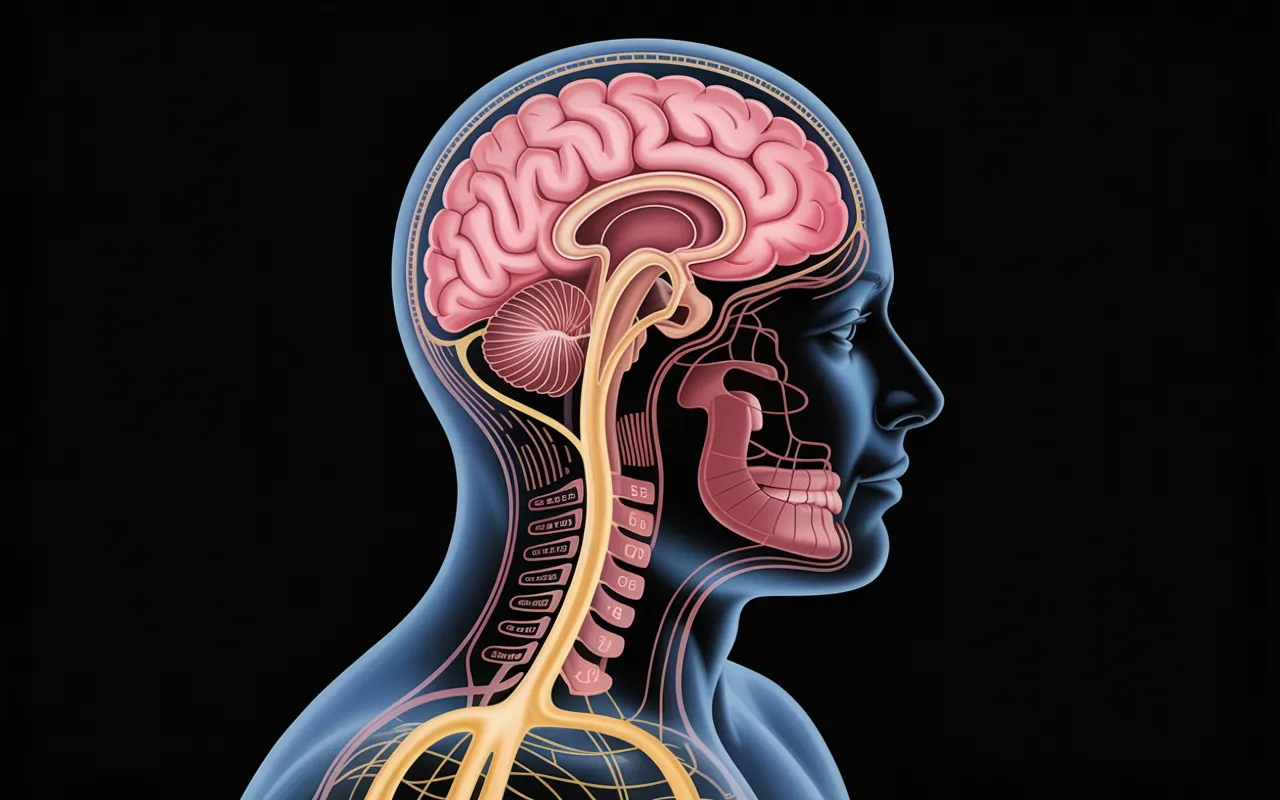
Neuroplasticity: Rewiring the Brain for Success
Another pillar of manifestation psychology is neuroplasticity—the brain’s ability to reorganize itself by forming new neural connections throughout life.
For decades, scientists believed the adult brain was fixed. We now know it is malleable. “Neurons that fire together, wire together.” Every thought you think strengthens a neural pathway. If you constantly think, “I am a failure,” you are building a superhighway for that thought, making it easier and faster to access in the future.
Visualization and the Brain
Manifestation techniques often involve vivid visualization. From a neurological perspective, visualization is a rehearsal. Brain imaging studies have shown that imagining an action activates many of the same brain regions as actually performing the action.
When you close your eyes and vividly imagine yourself giving a successful presentation, your brain is laying down the neural tracks for that success. You are strengthening the connections associated with confidence, speech, and posture.
By the time you actually step onto the stage, your brain feels like it has been there before. The anxiety is reduced because the neural pathway is already familiar. This isn’t spiritual attraction; it is biological preparation.
The Psychology of Belief: Self-Fulfilling Prophecies
One of the most well-documented psychological phenomena supporting manifestation is the self-fulfilling prophecy. This concept, coined by sociologist Robert K. Merton, suggests that a belief or expectation, whether true or false, can influence a person’s behavior in a way that causes the belief to become true.
The Pygmalion Effect
A classic example is the Pygmalion Effect. In famous educational studies, teachers were told that certain average students were “late bloomers” who were about to experience an intellectual growth spurt. In reality, these students were chosen at random.
However, because the teachers believed these students were gifted, they subconsciously treated them differently—giving them more attention, more encouragement, and more challenging material. At the end of the year, those students actually scored higher. The belief created the reality.
In manifestation, when you adopt the belief “I am wealthy” or “I am lovable,” you subconsciously change your behavior. You might walk with more confidence, take more calculated risks, or interact with others more warmly. These subtle behavioral shifts elicit different responses from the world around you, eventually confirming your initial belief.
Confirmation Bias: Seeing What You Expect
Skeptics often use “confirmation bias” to debunk manifestation, but proponents can actually use it as a tool. Confirmation bias is the tendency to search for, interpret, and recall information in a way that confirms one’s preexisting beliefs.
If you believe “making money is hard,” your brain will latch onto every news story about the recession, every rejection letter, and every bill. You will ignore the job openings or the side hustle success stories because they don’t fit your narrative.
Manifestation asks you to consciously flip this bias. By intentionally adopting a positive belief (“Money flows to me easily”), you task your brain with finding evidence for that truth. You start noticing the opportunities and the wins. You are hacking a cognitive bias to work for you rather than against you.

The Role of Emotion: Why “Feeling It” Matters
Manifestation teachers always emphasize the importance of feeling the wish fulfilled. It’s not enough to think the thought; you must generate the emotion. Psychology explains why this is crucial.
Emotional Tagging and Memory
The brain prioritizes information that carries an emotional charge. You likely remember exactly where you were during a major national tragedy or a personal triumph, but you can’t remember what you had for lunch last Tuesday. The amygdala (the brain’s emotional center) tags emotionally charged events as “important” for long-term storage in the hippocampus.
When you visualize a goal with intense emotion—joy, gratitude, excitement—you are signaling to your brain that this information is critical. You are prioritizing the goal in your cognitive hierarchy.
Furthermore, positive emotions broaden our thought-action repertoire. According to Barbara Fredrickson’s “Broaden-and-Build” theory, positive emotions like joy and interest expand our awareness and encourage novel, varied, and exploratory thoughts and actions. Negative emotions narrow our focus to survival. By cultivating the feeling of abundance, you biologically open your mind to see solutions you would miss in a state of stress.
Cognitive Dissonance and Identity Shifting
Manifestation often requires you to affirm things that aren’t yet true (“I am a successful author” when you haven’t written a book yet). This creates psychological friction known as cognitive dissonance—the mental discomfort experienced when holding two conflicting beliefs.
The brain hates cognitive dissonance and will work hard to resolve it. It has two options:
- Reject the new belief (stop saying the affirmation).
- Change behavior to align with the new belief (start writing the book).
Effective manifestation keeps the pressure on the new belief. By refusing to drop the affirmation, you force your subconscious to compel you toward actions that resolve the conflict. You start writing, networking, and acting like an author to close the gap between your reality and your identity.
Growth Mindset vs. Fixed Mindset
Psychologist Carol Dweck’s research on “mindset” parallels many manifestation principles.
- Fixed Mindset: Believing your abilities are static. “I’m just not lucky” or “I’m not good at business.”
- Growth Mindset: Believing abilities can be developed. “I can learn how to create wealth.”
Manifestation is inherently a growth mindset practice. It requires the belief that your current circumstances do not define your future potential. It challenges the fixed narrative of “this is just who I am” and replaces it with “this is who I am becoming.”
By practicing manifestation, you are training yourself to view challenges as temporary and surmountable, a key predictor of success in every field from athletics to business.
The Placebo Effect: The Power of Expectation
Perhaps the most scientifically validated form of manifestation is the placebo effect. In medical trials, patients given a sugar pill often experience real physiological healing simply because they believe they are receiving medicine.
Their brain releases endorphins, reduces stress hormones, and boosts immune function based solely on expectation.
This proves that the mind has tangible power over the body and physical reality. When you manifest health or vitality, you are essentially administering a self-induced placebo. You are creating a positive expectation that triggers real physiological and behavioral changes that support your health.

Goal Theory and Subconscious Priming
Psychological Goal Theory posits that goals affect performance by directing attention, mobilizing effort, increasing persistence, and motivating strategy development.
Manifestation techniques like vision boards and scripting are essentially high-octane goal-setting methods. They keep the goal “primed” in the subconscious.
Priming is a phenomenon where exposure to one stimulus influences a response to a subsequent stimulus, without conscious guidance. If you look at your vision board every morning, you are priming your brain for the day. If you see an image of healthy food, you are unconsciously more likely to choose a salad at lunch. You aren’t magically attracting the salad; you were primed to select it.
Limitations: Where Science Draws the Line
While psychology validates the mechanisms of manifestation, it is important to distinguish this from “magical thinking.”
Psychology does not support the idea that you can manifest things against the laws of physics (like levitation) or that you can control others’ minds (manifesting a specific person to love you).
The psychological view of manifestation is strictly about Self-Agency. It is about changing your perception, your behavior, and your physiology to maximize your chances of success. It acknowledges that while you cannot control external events, you can influence probabilities by showing up as your most prepared, aware, and resilient self.
Conclusion
Understanding the psychology behind manifestation doesn’t make it any less magical; in fact, it makes it more empowering. It moves the locus of control from the external universe to your internal biology.
You are not waiting for the stars to align. You are aligning your Reticular Activating System, leveraging neuroplasticity, hacking confirmation bias, and utilizing self-fulfilling prophecies.
You are using the most sophisticated tool in the known universe—the human brain—to engineer your reality.
So, the next time you visualize your goals or repeat an affirmation, know that you aren’t just engaging in wishful thinking. You are engaging in a scientifically sound cognitive workout. You are wiring your brain for the life you want to live.