
Have you ever noticed that when you wake up in a bad mood, everything seems to go wrong? You stub your toe, spill your coffee, and hit every red light on the way to work.
Conversely, when you wake up feeling great, the day seems to flow effortlessly. You catch the green lights, someone holds the door for you, and you receive good news.
It feels like magic or luck, but there is a philosophy that suggests something more intentional is at play. This is often referred to as the Law of Attraction. It’s the idea that your internal state—your thoughts and feelings—acts like a magnet, drawing corresponding experiences into your life.
If you are new to this concept, it can seem overwhelming. Is it spiritual? Is it psychological? Is it just wishful thinking? This guide is designed to strip away the confusion.
We will explore the fundamental basics of the Law of Attraction, how it is believed to work, and practical ways you can start testing it in your own life. No complex jargon or mystical promises—just a clear, grounded explanation for beginners.
What Is the Law of Attraction?
At its simplest level, the Law of Attraction is a universal principle stating that “like attracts like.”
This doesn’t mean that if you like pizza, you will attract pizza (though that would be nice). It refers to energy and vibration. The core belief is that everything in the universe, including your thoughts, is made of pure energy.
The Concept of Vibration
Imagine your mind is a transmission tower. Every thought you think and every emotion you feel sends out a signal or a “vibration.”
- Positive vibrations: Joy, gratitude, love, excitement, and peace.
- Negative vibrations: Fear, anger, sadness, guilt, and stress.
The Law of Attraction suggests that the universe responds to these signals by matching them. If you are constantly broadcasting a signal of stress and worry (“I never have enough time”), you will attract more situations that cause stress and worry.
If you broadcast a signal of appreciation (“I am so lucky to have this job”), you will attract more reasons to be appreciative.
It’s important to understand that this isn’t about punishment or reward. It’s simply a mechanism, much like gravity. Gravity doesn’t care if you are a good person or a bad person; if you drop a cup, it falls. Similarly, the Law of Attraction is believed to be neutral. It simply matches the frequency you are emitting.
Is It Thinking or Feeling?
A common mistake beginners make is thinking that positive thoughts are enough. You might stand in front of a mirror and say, “I am wealthy,” ten times. But if, deep down, you feel a knot of anxiety about your bank balance while saying it, the Law of Attraction responds to the anxiety, not the words.
The “feeling” is the fuel. Your emotions act as a guidance system, telling you what vibration you are currently in. This makes your emotional state a critical component of the basics. It’s not just about what you think; it’s about how you feel about what you think.
The Three Core Steps of Manifestation
To make this abstract concept practical, most teachers of the Law of Attraction break it down into a three-step process. This framework helps you move from “wishing” to “manifesting” (the act of bringing something into reality).
Step 1: Ask (Clarity)
The first step is to define exactly what you want. This happens naturally when you experience something you don’t like. If you are treated rudely, you instantly know you want to be treated with respect.
However, to be effective, you must be intentional. You need to send a clear request. Vague desires produce vague results. Instead of saying, “I want to be happier,” try defining what happiness looks like for you. Is it a specific hobby? A better relationship with your spouse? A calm morning routine?
Writing your desires down is a powerful way to “Ask.” It forces you to clarify your thoughts. When you write, use present tense and positive language. Instead of “I don’t want to be in debt,” write “I am financially free and secure.”
The universe doesn’t hear the “don’t”; it just hears “debt.” Focus entirely on the solution, not the problem.
Step 2: Believe (Faith)
This is often the hardest step. You must believe that what you asked for is possible and that it is on its way to you. You have to trust the process without needing to see immediate proof.
This step involves removing “resistance.” Resistance comes in the form of doubt, fear, and limiting beliefs. If you ask for a promotion but secretly believe you aren’t good enough to handle the responsibility, you are pushing the desire away.
Belief isn’t just a mental switch you flip. It takes practice. It involves challenging those negative inner voices and replacing them with supportive ones. It means acting as if the outcome is inevitable.
When you order a meal at a restaurant, you don’t worry that the chef won’t cook it. You relax and chat with your friends, trusting it will arrive. That is the level of belief required here.

Step 3: Receive (Alignment)
The final step is to receive. This means bringing yourself into an emotional match with your desire. You need to feel the way you think you will feel after you get what you want.
If you think a new car will make you feel excited and free, you need to find ways to feel excited and free now, before the car arrives. This is called “alignment.” When you feel good, you are on the frequency of receiving.
Receiving also involves taking “inspired action.” The Law of Attraction isn’t about sitting on the couch waiting for a check to fall through the ceiling. It’s about being open to opportunities.
When you are aligned, you might get a sudden urge to call an old friend, apply for a specific job, or take a new route home. These nudges are often the universe guiding you toward your desire. You must be open and willing to act on them.
The Science and Psychology Behind It
Skeptics often dismiss the Law of Attraction as pseudoscience. While it’s true that “vibrational frequencies” of thoughts haven’t been proven in a physics lab, there are well-established psychological principles that explain why these practices work.
The Reticular Activating System (RAS)
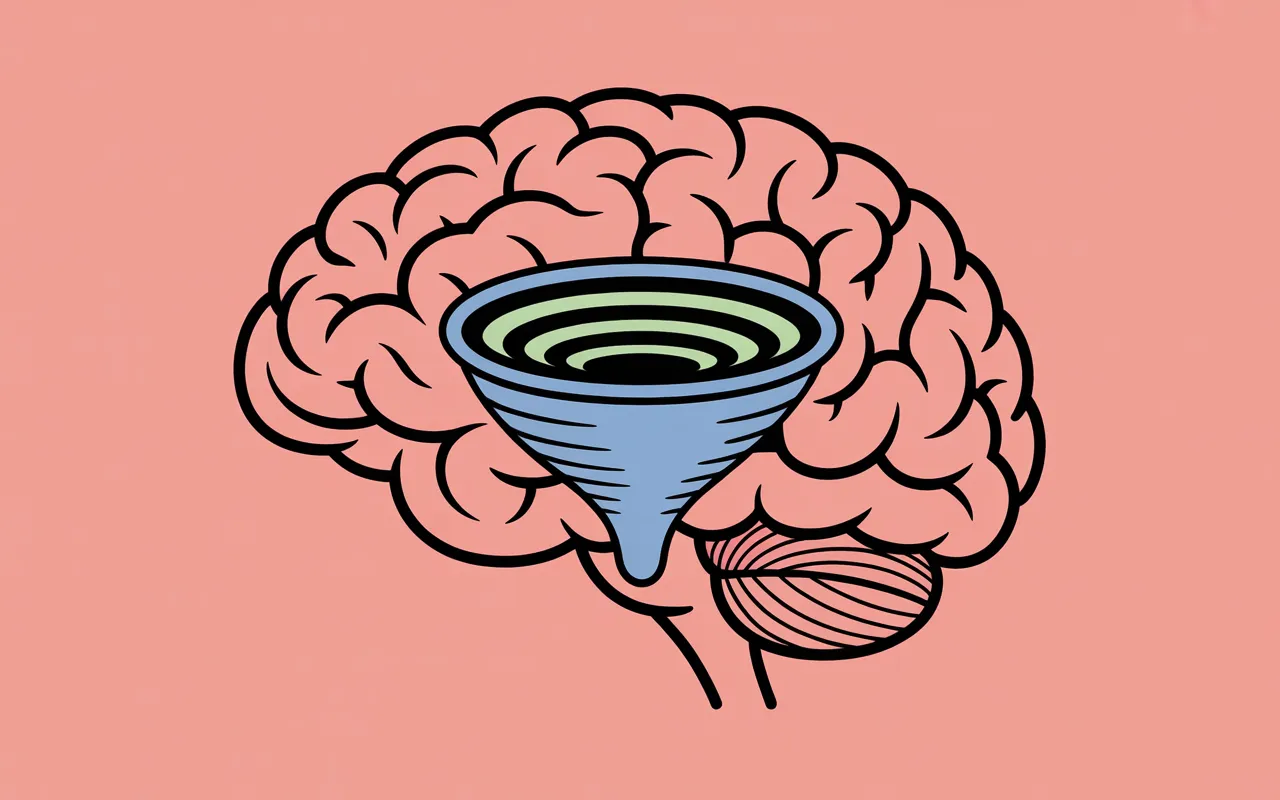
Your brain has a filter called the Reticular Activating System (RAS). Its job is to filter out the millions of bits of data you encounter every second, letting only the important stuff through to your conscious mind.
When you focus intensely on a goal (Step 1: Ask), you are programming your RAS. You are telling your brain, “This is important.”
- If you decide to buy a specific model of car, you suddenly see that car everywhere.
- If you decide you want to find a job in graphic design, your eyes will suddenly catch “hiring” signs or LinkedIn posts you previously would have scrolled past.
The Law of Attraction encourages you to program your RAS for positivity and opportunity rather than negativity and threat.
Confirmation Bias
We are wired to look for evidence that supports our beliefs. If you believe “people are generally kind,” your brain will notice the person holding the door or the stranger smiling at you. If you believe “people are selfish,” you will only notice the person who cut you off in traffic.
By consciously choosing positive beliefs (Step 2: Believe), you train your brain to find evidence of good in your life. This changes your perception of reality, which changes your behavior, which ultimately changes your outcomes.
Self-Fulfilling Prophecies
If you believe you will succeed, you act with confidence. You make eye contact, you speak clearly, and you take risks. This behavior makes it more likely that people will trust you and hire you. Your belief created the result.
Conversely, if you believe you will fail, you act timidly, you hesitate, and you sabotage yourself. Your belief created that result, too. The Law of Attraction is, in many ways, a method for managing your own psychology to create positive self-fulfilling prophecies.
Common Myths and Misconceptions
As a beginner, it is crucial to navigate the misinformation surrounding this topic. There is a lot of “hype” that can lead to disappointment if you don’t understand the nuances.
Myth: It works instantly.
Reality: Manifestation usually takes time. We live in a physical reality with a buffer of time. This is actually a good thing! Imagine if every fleeting angry thought you had manifested instantly. The delay gives you time to refine your focus and ensure you truly want what you are asking for. Patience is a key part of the process.
Myth: You have to be happy 100% of the time.
Reality: This is impossible and unhealthy. “Toxic positivity” involves suppressing real emotions like sadness or anger.
The Law of Attraction doesn’t ask you to be a robot. It asks you not to dwell in negativity. Feel your feelings, process them, and then gently reach for a better-feeling thought. It’s about your dominant vibration over time, not every single second.
Myth: It’s magic that replaces work.
Reality: You cannot visualize a clean house and expect the broom to move itself. The Law of Attraction helps you align your energy so that the work feels easier and more inspired. It helps you work smarter, not harder. It brings you the opportunities, but you still have to walk through the door.
Myth: It’s selfish.
Reality: Some people worry that focusing on their own desires is selfish. However, you cannot help others if you are depleted.
By filling your own cup and living a life of joy and abundance, you have more resources, energy, and love to give to others. A happy, fulfilled person is a greater asset to their community than a miserable, resentful one.
Practical Exercises for Beginners
You don’t need to buy expensive courses to start using the Law of Attraction. Here are three simple, free exercises you can start today to build your “manifestation muscle.”
1. The Gratitude Journal
Gratitude is the highest vibration. You cannot feel fear and gratitude at the same time. By focusing on what you already have, you signal to the universe (and your brain) that you are abundant.
The Exercise: Every morning or evening, write down 3 to 5 things you are grateful for. They don’t have to be huge.
- “I am grateful for this warm coffee.”
- “I am grateful my car started today.”
- “I am grateful for the text from my mom.”
Focus on the feeling of appreciation as you write them. This shifts your baseline energy.
2. Visualization (Mental Rehearsal)
Visualization is used by elite athletes to improve performance. It primes the brain for success.
The Exercise: Spend 5 minutes a day sitting in a quiet place. Close your eyes and imagine your life as you want it to be. Don’t just see it like a movie; step into it.
- What does it smell like?
- Who is with you?
- How does your body feel?
The more sensory details you add, the more real it feels to your subconscious mind.

3. The “Climb the Ladder” Technique
This is a simple way to test the law with something small to build your confidence.
The Exercise:
- Close your eyes and visualize yourself climbing a ladder. Feel the rungs on your hands, feel the movement of your legs. Do this vividly for a minute.
- Let it go. Don’t obsess over it. Just go about your day.
- See how long it takes for you to see a ladder in real life, on TV, or in a picture.
When you see it, acknowledge it. “I created that.” This small proof helps you believe that you can create bigger things.
Troubleshooting: Why Isn’t It Working?
You’ve made your vision board, you’re thinking positive thoughts, but nothing is changing. Why? This is the most common question beginners ask. Usually, the block comes down to one of three things.
1. Desperation (Attachment)
When you want something too much, you send out a vibration of “lack.”
- “I need this money to pay rent.”
- “I must find a partner or I’ll be alone forever.”
This energy screams “I don’t have it.” Since like attracts like, you attract more situations where you don’t have it. The paradox of the Law of Attraction is that you have to be okay without the thing in order to get it. You need to find peace in your current reality while looking forward to the new one.
2. Hidden Limiting Beliefs
You might consciously want a new job, but subconsciously believe “Work is supposed to be hard” or “I’m not smart enough.” These hidden programs run in the background and sabotage your efforts. Uncovering these requires honest self-reflection. Ask yourself, “What is the downside of getting what I want?” Often, the answer reveals the fear holding you back.
3. Inconsistency
You meditate for 10 minutes in the morning (high vibration), but then spend the next 8 hours complaining about your boss, gossiping with coworkers, and worrying about the news (low vibration). Your dominant vibration is negative. Consistency matters. It’s a lifestyle shift, not just a morning routine.
Integrating the Law of Attraction into Daily Life
The goal isn’t to treat the Law of Attraction as a separate activity you do for twenty minutes a day. The goal is to integrate these principles into your everyday existence.
Mindful Morning Routine
Start your day intentionally. Before you check your phone or email, take two minutes to set the tone. “Today, I intend to be calm and productive. I intend to see the good in people.” This pre-paves your path for the day.
The “Pivot” Technique
Throughout the day, you will inevitably encounter negativity. Someone cuts you off, or you receive a rude email. Catch yourself. Notice the anger rising. Then, pivot.
- Acknowledge: “I am angry.”
- Pivot: “But I don’t want to stay angry. I want to feel peace. I’m going to take a deep breath and let this go.”
You don’t have to be perfect; you just have to be willing to correct your course.
Evening Review
Before you sleep, replay your day. But here is the trick: edit the bad parts. If you had an argument, replay it in your mind the way you wish it had gone. Imagine a peaceful resolution. This prevents you from going to sleep with a vibration of conflict and helps you wake up with a clean slate.
Conclusion
The Law of Attraction is a journey of self-discovery. Whether you view it as a mystical law of the universe or a practical psychological framework, the result is the same: it empowers you. It takes you out of the passenger seat and puts you in the driver’s seat of your life.
By taking responsibility for your thoughts and feelings, you realize that you are not a victim of circumstance. You are a creator. You have the power to shape your reality, shift your perspective, and attract the life you truly desire.
Start small. Be patient with yourself. Treat it as an experiment. Try the gratitude journal for 30 days. Test the “ladder” exercise. Watch how your world begins to shift when you shift your internal world. The basics are simple: Ask clearly, believe deeply, and receive joyfully. The rest is just details.
Your life is waiting for you to tune in. What signal will you broadcast today?