You’ve likely heard stories of people who seem to have a “Midas touch.” Everything they attempt turns to gold, opportunities land in their lap, and they navigate life with an enviable ease.
Conversely, you might know others who seem trapped in a perpetual cycle of bad luck, where one mishap follows another. Is this just random chance, or is there a system operating beneath the surface?
For proponents of the Law of Attraction, the answer is clear: there is a system, and it is always running. The concept is often simplified into catchy slogans like “thoughts become things,” but the actual mechanics of how the Law of Attraction works are far more nuanced.
It isn’t just about wishing for a sports car and waiting for it to appear in your driveway. It involves a complex interplay of psychology, focus, belief systems, and action.
This guide explores the fundamental basics of how this universal principle is said to operate. We will strip away the mystical fluff and look at the core mechanics, the role of your subconscious mind, and the practical steps that bridge the gap between thinking and receiving.
Whether you are a skeptic looking for logical explanations or a believer seeking to deepen your understanding, this article will break down the “how” behind the “wow.”
The Core Mechanic: Everything Is Vibration
To understand how the Law of Attraction works, you first have to accept its primary premise: everything is energy.
This isn’t just a spiritual concept; it’s a loose interpretation of quantum physics often used in New Thought philosophy. The idea is that every thought, emotion, and physical object has a unique vibrational frequency.
The Radio Analogy
Think of yourself as a living radio tower. You are constantly broadcasting a signal out into the universe. This signal is composed of your dominant thoughts and your prevailing emotional state.
If you are broadcasting a signal of “I am lonely and unlovable,” the theory states that you cannot pick up the signal of “loving, healthy relationship.” They are on different frequencies. To change your experience—what you hear on the radio—you must first change your frequency. You have to tune your internal dial to match the reality you want to experience.
Why “Like Attracts Like” Matters
The Law of Attraction posits that vibrations of similar frequencies are drawn to one another. This is the magnetic quality of the law. When you are in a state of high vibration—feeling joy, gratitude, or excitement—you become a magnet for circumstances that match that high energy.
Conversely, if you are stuck in a low vibration—fear, anger, or shame—you tend to attract more situations that generate those same feelings. This explains the “downward spiral” many people experience during tough times.
One bad thing happens, you focus on it, your vibration lowers, and suddenly, three more bad things happen. Understanding this cycle is the first step to breaking it.
The Role of the Subconscious Mind
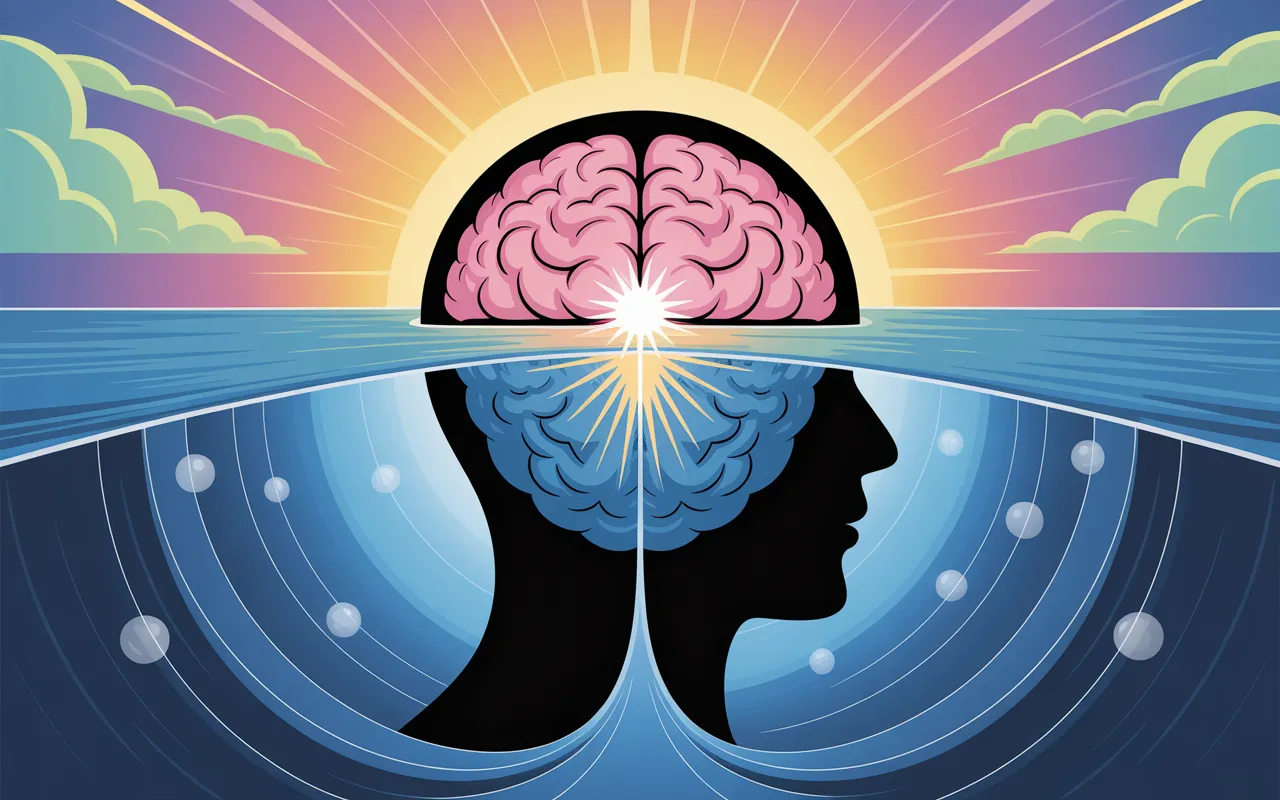
While your conscious mind sets the goals (“I want a promotion”), your subconscious mind runs the show. It is the engine room where your deep-seated beliefs, habits, and memories are stored.
Understanding how the Law of Attraction works requires looking at the conflict that often exists between these two parts of your brain.
The Conflict of Beliefs
You might consciously think, “I want to be wealthy.” However, if your subconscious mind holds a belief from childhood that “money is the root of all evil” or “rich people are greedy,” you are sending out a mixed signal.
The Law of Attraction responds to your vibration, and your vibration is dictated by your deepest truths, not just your surface-level wishes. If 95% of your mind (the subconscious) believes money is bad, and 5% (the conscious) wants money, the 95% will win every time.
This is why positive thinking alone often fails. You cannot fool the universe, and you cannot fool your own subconscious.
Reprogramming the Autopilot
For the Law of Attraction to work effectively, you must align your subconscious beliefs with your conscious desires. This is often called “reprogramming.” Techniques like visualization, repetition, and affirmations are essentially tools to rewrite the software of your mind.
When you visualize a goal repeatedly with intense emotion, your subconscious mind has trouble distinguishing between what is real and what is imagined. Over time, it accepts the new image as truth.
Once your subconscious accepts a new reality—for example, “I am a successful entrepreneur”—it begins to work automatically to make that reality manifest, filtering your perception to spot opportunities you would have previously missed.
The Three-Step Creative Process
Most teachers of the Law of Attraction break the operation down into a three-step creative process. This framework helps explain the sequence of events necessary to turn a thought into a tangible outcome.
Step 1: You Ask (The Launch)
Asking happens naturally all the time. Every time you know what you don’t want, you automatically clarify what you do want. If you are stuck in traffic and frustrated, you are simultaneously asking for a clear road and flow.
The problem is that most people stop at the frustration. They focus on the traffic (what they don’t want) rather than the flow (what they do want).
To make this step work, you must be intentional. You must consciously direct your focus toward the solution rather than the problem. The “Ask” is the launch of the rocket; it sets the direction.
Step 2: The Universe Answers (The Logistics)
According to this philosophy, this step is not your job. Once you have launched the desire, the universal forces (or your subconscious processing power) begin to rearrange circumstances to make it happen.
This is the “how” that trips people up. We often want to control every detail. “I want a new job, but it has to be at this specific company, in this specific month.” The Law of Attraction suggests that when you obsess over the “how,” you introduce resistance.
You are effectively saying, “I don’t trust that this will happen unless I force it.” Step 2 requires you to trust that the logistics are being handled, often in ways you cannot foresee.
Step 3: You Allow (The Landing)
This is the most critical and often the most difficult step. “Allowing” or “Receiving” means bringing yourself into vibrational alignment with your desire.
Imagine you have asked for a package to be delivered (Step 1). The company has shipped it (Step 2). But if you keep your front door locked and refuse to answer the bell because you’re worried it won’t arrive, you cannot receive the package (Step 3).
To allow, you must feel the relief, joy, and excitement of the desire before it arrives. You must act as if it is already done. This absence of resistance—the absence of worry, doubt, and impatience—opens the door for the manifestation to enter your life.
The Critical Role of Emotion: Your Guidance System
If thoughts are the vehicle, emotions are the fuel. A thought without emotion has very little magnetic power. You can think “I am a millionaire” a thousand times a day, but if you feel poor, anxious, and desperate while saying it, the Law of Attraction acts on the anxiety, not the words.
Emotional Guidance Scale
Think of your emotions as a GPS system. Positive emotions (joy, love, appreciation) indicate that you are moving toward your desire.
You are in alignment. Negative emotions (fear, depression, anger) indicate that you are moving away from your desire. You are offering resistance.
How the Law of Attraction works is by responding to this emotional fuel. If you want to know what you are attracting right now, simply stop and ask yourself: “How do I feel?”
If you feel worried about paying bills, you are attracting more bills. The solution is not to ignore the bills, but to find a thought that brings you a slight relief.
You might not be able to jump from “panic” to “abundance,” but you can jump from “panic” to “determination.” That small shift in emotion improves your vibration and changes your point of attraction.

Action: The Missing Link
A common criticism of the Law of Attraction is that it promotes laziness—the idea that you can just sit on the sofa and manifest a mansion. This is a misunderstanding of how the law works. It is the Law of Attraction, and the last six letters spell Action.
Inspired Action vs. Forced Action
There is a difference between grinding your way to success and flowing your way there.
- Forced Action: This feels hard. It is born out of fear or a need to control. It feels like swimming upstream. You are exhausted, and the results are often minimal compared to the effort.
- Inspired Action: This feels exciting. It is the sudden urge to call an old friend, the impulse to turn down a different street, or the burst of energy to write a business plan at midnight.
When you are in alignment (Step 3), you will receive nudges. The Law of Attraction works by delivering these impulses to you. Your job is to act on them.
The action itself is part of the receiving process. You aren’t acting to make it happen; you are acting to receive what is happening.
Co-Creation
This perspective shifts the view of work. You are co-creating with the universe. You do the internal work of alignment, and then you do the external work that feels natural and timely. It’s a dance between mindset and effort.
The effort becomes more effective because it is backed by the powerful momentum of your belief.
Scientific Parallels: Reticular Activating System (RAS)
For those who find the “vibration” talk too abstract, there is a biological explanation for how the Law of Attraction works: the Reticular Activating System (RAS).
The RAS is a bundle of nerves at our brainstem that filters out unnecessary information so the important stuff gets through. Your brain is bombarded with millions of bits of data every second. You can’t process it all, so the RAS acts as a bouncer for your brain.
How the RAS supports the Law
The RAS lets in information that matches your internal beliefs and focus.
- If you decide to buy a red Tesla, your RAS gets the instruction: “Red Teslas are important.” Suddenly, you see them everywhere. They were always there, but your RAS was filtering them out. Now, it highlights them.
- If you believe “opportunities are everywhere,” your RAS will scan your environment for evidence of opportunities and bring them to your conscious attention.
- If you believe “people are mean,” your RAS will highlight every rude look and ignore the smiles.
In this way, you literally see what you believe. The Law of Attraction works, in a biological sense, by programming your brain’s filter to hunt for the people, resources, and ideas that match your goals.

Why It Sometimes Doesn’t Work (The Resistance Factor)
If the Law of Attraction is always working, why don’t we have everything we want? The answer usually lies in resistance. Resistance is any thought or belief that contradicts your desire.
The Buffer of Time
Imagine if every thought you had manifested instantly. If you thought of an elephant in your living room, it would appear. That would be chaotic. There is a “buffer of time” in our physical reality. This delay allows you to change your mind and refine your focus.
The problem arises when we use this time buffer to introduce doubt. We plant a seed (ask for a desire), but then we dig it up every day to see if it’s growing (doubt and impatience). By constantly checking for the absence of the goal, we reinforce its absence.
Paradoxical Intention
Sometimes, wanting something too much pushes it away. Desperation is a vibration of lack. It screams, “I don’t have this!” Since like attracts like, desperation attracts more reasons to be desperate.
This is why people often find love right after they give up looking, or why money comes when you finally stop stressing about it.
When you “give up” the struggle, you release the resistance. You drop the oars and let the stream carry you. This release of tension allows the Law of Attraction to finally deliver what you asked for.
Practical Steps to Master the Mechanics
Understanding the theory is great, but application is what changes lives. Here is how to apply these mechanics daily.
1. Monitor Your Inner Monologue
Start paying attention to the story you tell yourself. Are you the victim or the hero? Do you complain about “what is,” or do you talk about “what is coming”? Change the narrative. When you catch yourself complaining, stop and pivot. Say, “That’s what I don’t want. What do I want instead?”
2. Practice the “17-Second Rule”
Some teachings suggest that holding a pure thought for just 17 seconds sets the combustion process in motion. If you can hold that focus for 68 seconds (four blocks of 17), the manifestation begins to take physical form.
Try to focus purely on the joy of your desire for one minute without letting a doubt creep in. It’s harder than it sounds, but it builds incredible mental discipline.
3. Gratitude as a Reset Button
Gratitude is the quickest way to raise your vibration. It is impossible to feel sincere gratitude and fear at the same time. If you feel your vibration dropping, list five things you appreciate. This isn’t just a nicety; it’s a mechanical reset of your frequency. It tunes your radio dial back to the “receiving” station.

Conclusion: You Are Always Creating
The most empowering realization about how the Law of Attraction works is that you cannot turn it off. You are creating your reality every moment of every day, whether you are aware of it or not. Most people create by default, reacting to the news, their bank account, or their boss, and then recycling those reactions into more of the same experiences.
By understanding the mechanics—the vibration, the role of the subconscious, and the necessity of alignment—you can start creating by design. It requires patience and practice. It asks you to take full responsibility for your internal state.
But the reward is a life that feels less like a series of random accidents and more like a masterpiece you are intentionally painting.
Start small. Test the law. Focus on something minor, like a free cup of coffee or seeing a blue butterfly.
Prove to yourself that the connection between your mind and your world is real. Once you see the evidence, the heavy lifting is done, because belief will no longer be a choice—it will be your new reality.